Showing posts with label Alichur. Show all posts

Monday, 29 October 2012

Murghab and the stark desolation of the high Pamirs

We arrived in Murghab after dark, and were dropped off in front of the hospital, which has to be one of the bigger buildings in Murghab. We went with our Pamiri friend to greet his colleagues, who offered us some dinner, including meat that they later said was Marco Polo sheep. Dwindling populations of these animals make them something you would really rather not eat, but it's also difficult to fault people who live in such a harsh environment for hunting animals.

After eating we were shown to the room where Megi and I would stay: a simply room with six single beds. These Soviet-era beds had woven steel springs underneath the mattresses, and age and wear had resulted in them being like hammocks with a mattress on top. Traditional-style tapchans on the floor would have been preferable. Although the hospital was a solid building built in Russian/Soviet style, the bathroom facilities were rather shocking. There was a large outhouse building located a few dozen meter north of the hospital, with separate men's and women's sides. There wwas no electricity or lights, so we had to bring our own flashlights. Inside, these were the dirtiest and smelliest facilities I saw on my trip. Although everything was concrete, the holes in the floor were surrounded by toilet paper and shit where people had missed their target in the dark. It didn't seem like anything was ever cleaned. Apparently the women's side was even worse. Hardly the sort of hygiene one would hope for in a hospital.

The next morning we split up and arranged to meet later at the Yak House, which is a tourist-oriented handicraft shop on the northeastern edge of town. Since META had folded earlier that year (but has since resumed operation), it was the center of tourism in the region. I headed down to the mosque and market area, those being the only real places of note in town.

_DSC3805
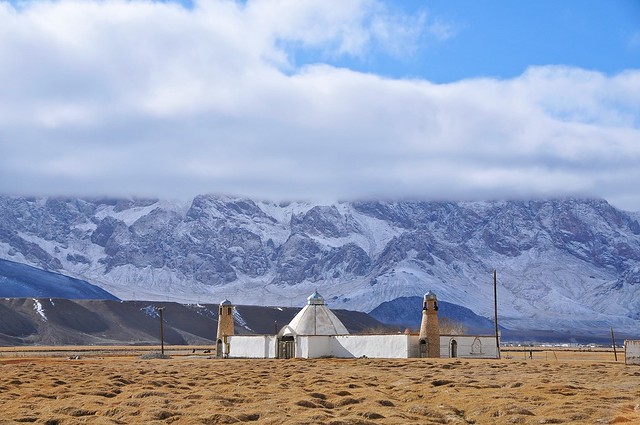
The Murghab mosque. Most of the high Pamirs east of the Koi-Tezek pass is ethnically Kyrgyz and therefore Sunni, for whom mosques are of relatively greater importance.

_DSC3809
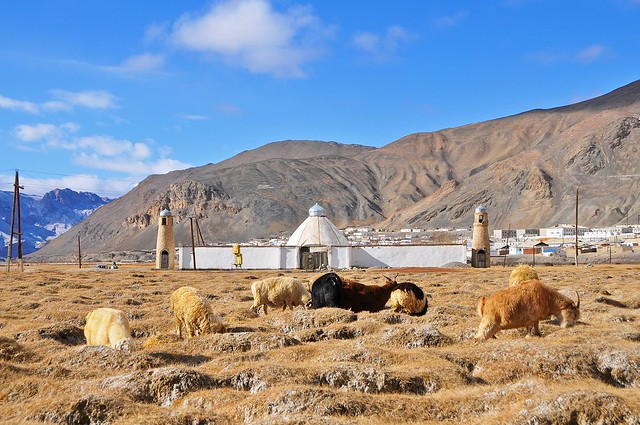
Goats in the bumpy marshland in front of the mosque.

_DSC3812
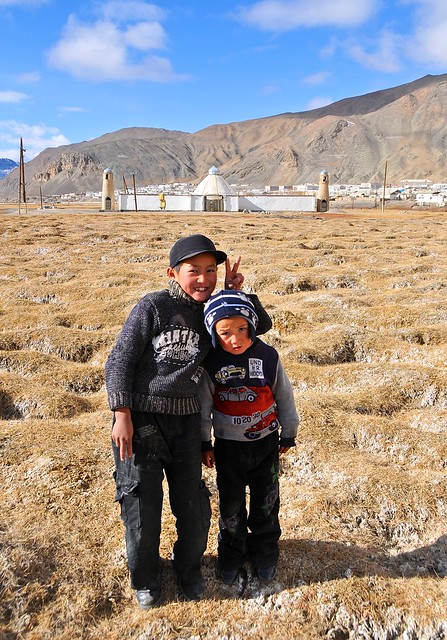
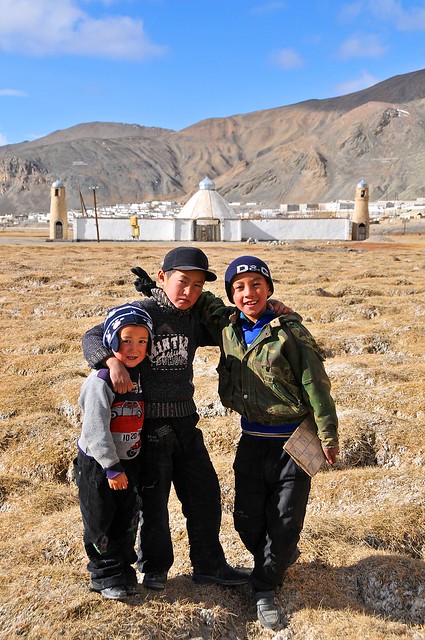
A pair of kids were near the goats, though not exactly shepherding them.

_DSC3815
A foreigner with a camera? Let me get in on this action!

_DSC3821
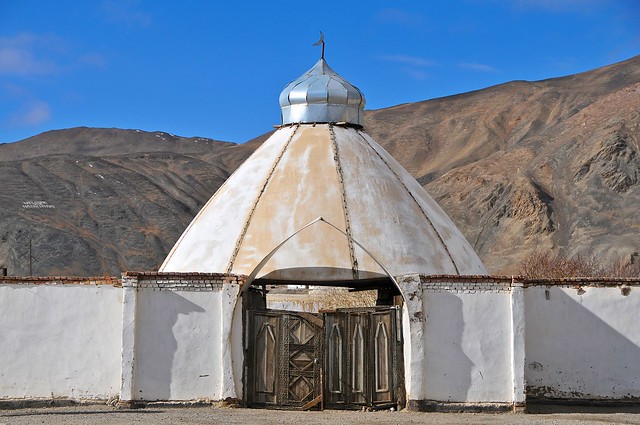
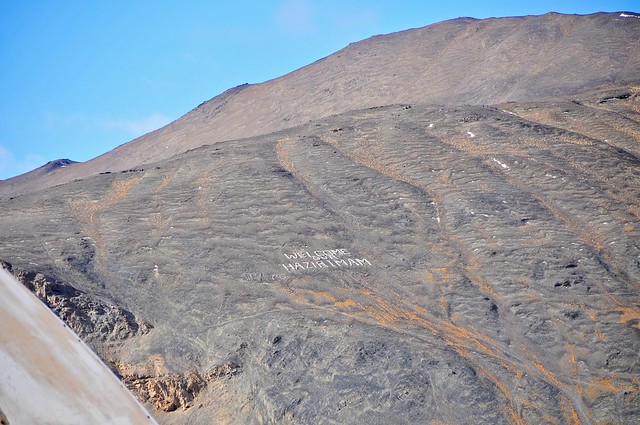
The Aga Khan doesn't limit his aid to Ismailis, but helps the greater community (including the water pipeline I saw in Kyrgyzstan near Sary Tash). On the mountain to the left of the dome you can see a message of welcome to the Aga Khan spelt out in stones.

_DSC3820
The Aga Khan is also known as the Mawlana Hazar Imam, so I believe this is supposed to read "Welcome our Hazar Imam."

_DSC3822
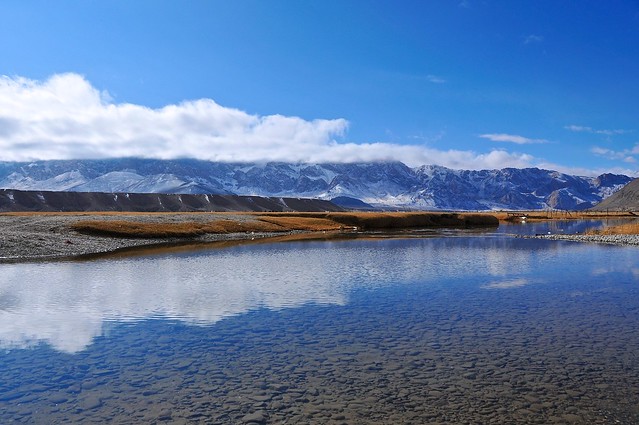
A river and backwater eddies are south of the mosque.

_DSC3824
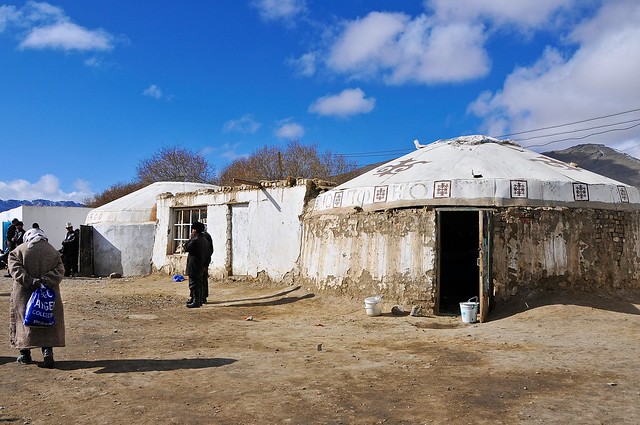
A brick and mortar yurt anchors one end of the market. Meat is sold inside. But what I really want to talk about in this picture is the blue plastic bag that old lady is carrying. It caries the logo of the "Aygen Collection," and it's the unofficial bag of Kyrgyzstan and Tajikistan. But although it looks like the bag of some sort of designer label or store—albeit one unintelligible to those who use it—it actually corresponds to no label or store known to Google. Instead, the label really describes the bag, and it's popular because it's a a relatively strong and reusable bag. You do have to pay for them, but they're everywhere. Apparently in the mid-90s the bag of choice in the region bore the logo of a Glascow pet store.

The ubiquitous bag photo-bombs an editorial photo illustrating drinks vendors in Kyrgyzstan.

Sunday, 28 October 2012

Pamir Highway, Part 1: Khorog to Murghab

Megi and I were to meet in the morning at the market, where vehicles to Murghab leave. I arrived and wasn't able to find her, and after waiting around and periodically wandering down the main road to other places she might be waiting (we agreed to meet where vehicles leave, but it isn't always clear exactly where that is), I began to fear that she might have left before me for some reason. It turned out that she and the family she had been staying with had spent the night at a different house, and they had only returned relatively late in the morning. So it was pretty late by the time we were prepared to leave, and most of the vehicles had already left, but we found a Chinese-made minivan without too much difficulty, and were on our way before too much time had passed. We were stuck in the back seat with some cargo, and it was actually fairly comfortable because you don't have to worry about elbowing the cargo or slinging your legs over them.

Chinese minivans are popular on this route, as the road is decent enough for them not to be shaken apart, they hold a fair number of people, and they're dirt cheap: I think they cost something like $6,000. One of the other passengers in our van was a bright young girl of maybe 12 or so who was returning to her family in Murghab, and it was really charming to watch her talk with Megi and the other passengers, as she was absolutely nothing like the timid, downtrodden girls you see in the Fann mountains. She was bright and outgoing, and had no fear of challenging and disagreeing with the adult men in the van, let alone simply talking with them.She wasn't that happy to be returning to Murghab, however, as there simply wasn't enough there to be appealing to her

Megi had earlier told me about her taxi ride from Dushanbe to Khorog, where she had been similarly surprised at just how different Pamiri women were from the lowland Tajik women she was used to in Kulob. The women in her car showed no fear or hesitation to dominate and chide the men, telling her that in Pamiri families it is women who wear the pants in the family. This is so different than most of Central Asia, and Tajikistan in particular, but hugely refreshing, and a large part of the reason why Pamiris are my favourite people of Central Asia.

On the road to Murghab

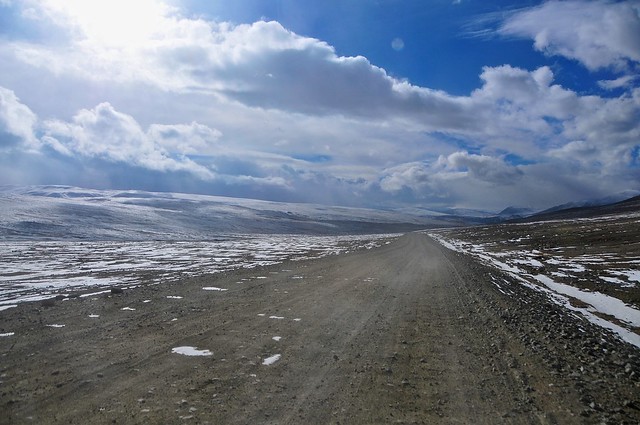
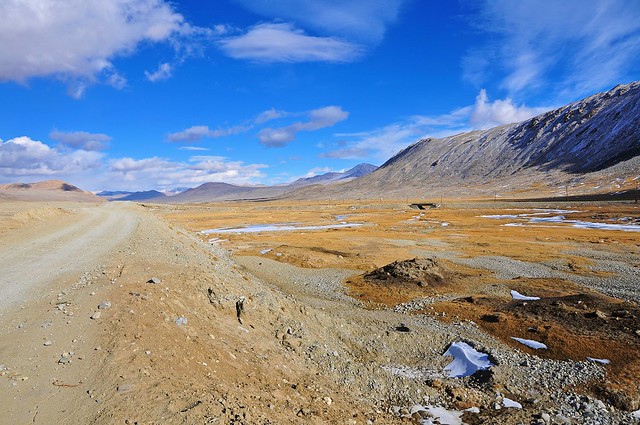
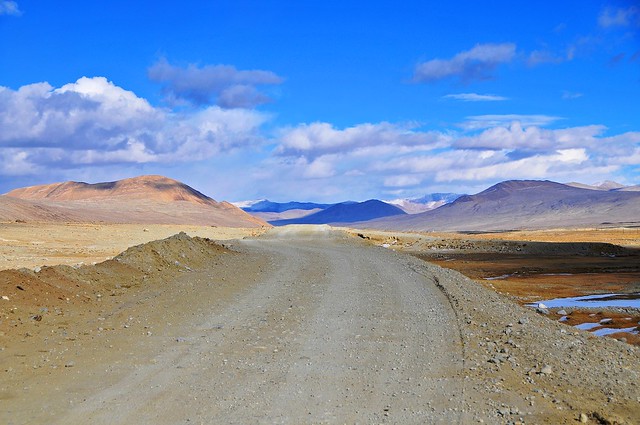
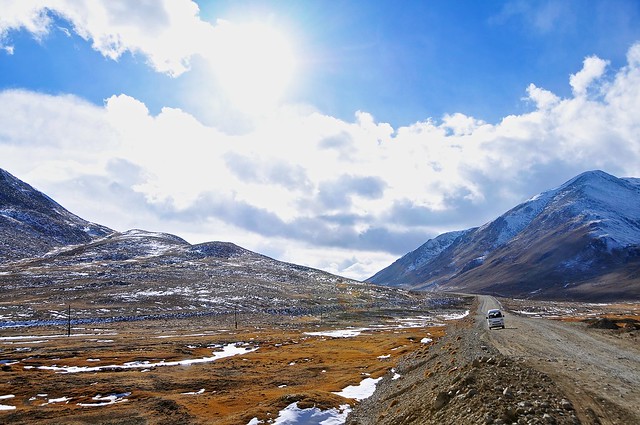
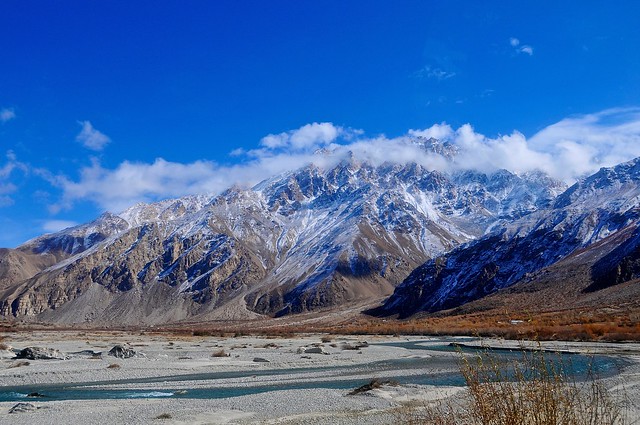
For the first hour or so the M41 east of Khorog has scenery similar to the road between Khorog and Ishkashim, which is to say that it's relatively verdant with lots of trees and small villages. After a while, however, the valley rises and widens into a more desolate and rocky environment of the type we might expect to see in high-altitude mountain plains, rising to the deceptively high Koi-Tezek pass (4,272 meters high, even though the pass is not between close mountain but simply the crest of a long hill in the middle of a wide valley).
_DSC3740
Entering the high plains.

_DSC3741
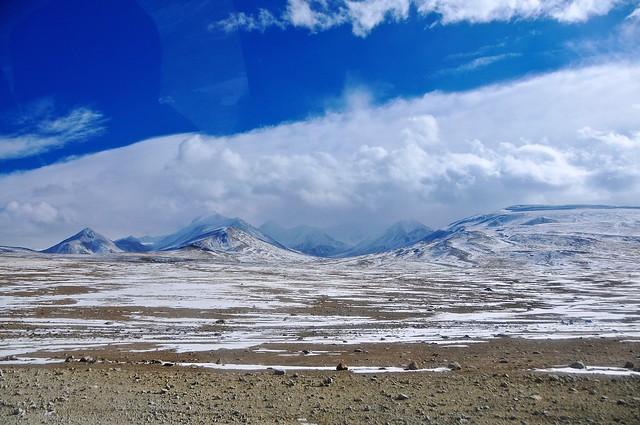
Near the Koi-Tezek pass. Despite the snow, it feels like a desert and it's difficult to imagine that much vegetation grows in this stony valley, even in the summer.


_DSC3742
Mountains to the south.

_DSC3744
We came across a car stopped at the side of the road, and got out to stretch our legs while the drivers talked. It turns out the other car had run out of gas, so we gave him a ride to fetch some.

_DSC3746
The road is often washboard and bumpy, but isn't overly rocky.

_DSC3747
Chinese minivan in need of gas. Not the best place to get stranded.

_DSC3748
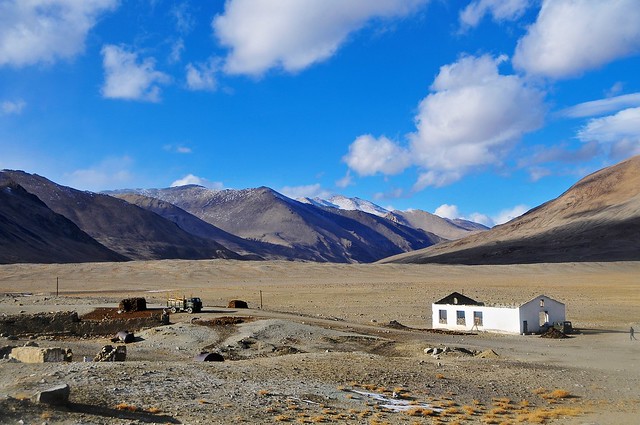
We dropped the driver here to get gas; I hope he found some. When I see a building with a gabled roof line, I imagine that it's a Soviet-era building constructed by the government. This may explain why it's abandoned.