The scenic island of Miyajima, considered on of the top 3 sights in Japan, is a short train and ferry ride away from Hiroshima.
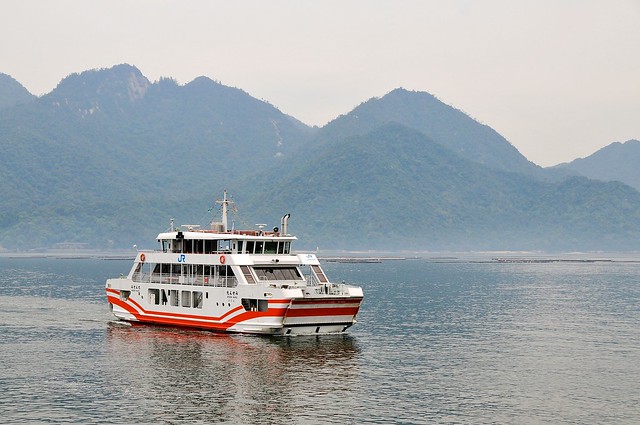
Tram line #2 goes all the way from the JR station to the ferry station (and also stops in front of the Peace Park), but it takes over an hour; the other option is to take a train from the JR station and save yourself 40 minutes at the expense of an extra ¥150. There are two ferry options at Miyajima. One of them is run by JR, and accepts JR train passes. Both of them run every 15 minutes and charge ¥180. There are also ferries that run directly from the Peace Park to Miyajima, some take 50 minutes for about ¥1,500, while there may also be a fast ferry that takes 25 minutes and costs ¥2,400.

If you only have a day in Hiroshima, it's possible to see the sights around the Peace Memorial in the morning in Hiroshima before heading out to Miyajima for the afternoon. The ferries continue to run back to the mainland until quite late, so you could do both in a day. If you are going from the Peace Memorial to Miyajima, then it's actually faster to take tram #2 from the park to the ferry, rather than backtrack to the JR station and wait for the train. Catching the fast ferry from the Memorial is an even faster option if you don't mind spending the money.
The deer on Miyajima are tame, and will approach you if you're carrying food. Japanese treat them more like pets and less like wildlife. From a Canadian perspective it's disrespectful and sad. When I was her in 1993 I saw deer being shoved by tourists who were no longer interested in them, as well as deer eating plastic. Things seem better now, with fewer deer.
Tram line #2 goes all the way from the JR station to the ferry station (and also stops in front of the Peace Park), but it takes over an hour; the other option is to take a train from the JR station and save yourself 40 minutes at the expense of an extra ¥150. There are two ferry options at Miyajima. One of them is run by JR, and accepts JR train passes. Both of them run every 15 minutes and charge ¥180. There are also ferries that run directly from the Peace Park to Miyajima, some take 50 minutes for about ¥1,500, while there may also be a fast ferry that takes 25 minutes and costs ¥2,400.
If you only have a day in Hiroshima, it's possible to see the sights around the Peace Memorial in the morning in Hiroshima before heading out to Miyajima for the afternoon. The ferries continue to run back to the mainland until quite late, so you could do both in a day. If you are going from the Peace Memorial to Miyajima, then it's actually faster to take tram #2 from the park to the ferry, rather than backtrack to the JR station and wait for the train. Catching the fast ferry from the Memorial is an even faster option if you don't mind spending the money.
Miyajima at low tide
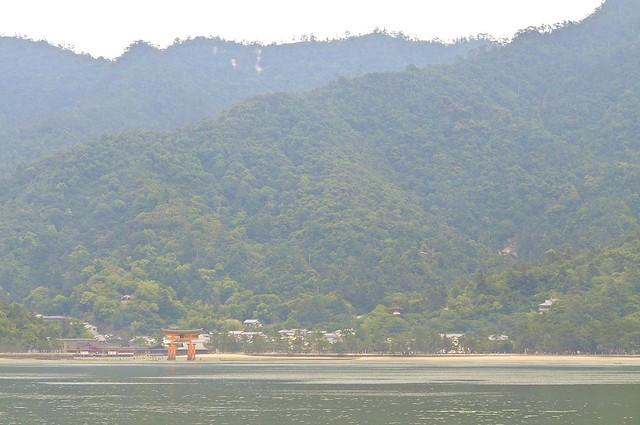 |
The Great Tori (O-tori) from the ferry on a rainy day.
|
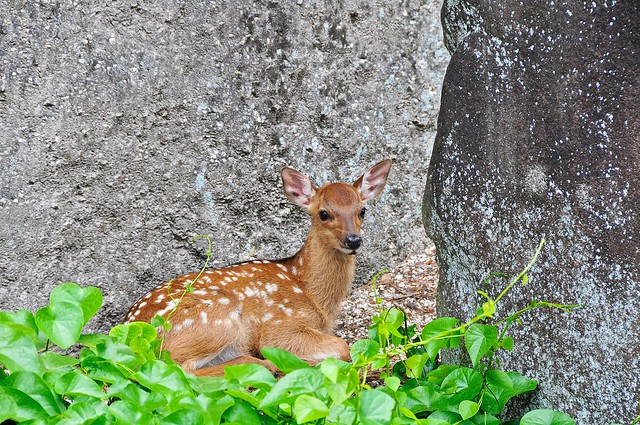 |
Young deer watching the world go by. Even the mature deer have spots.
|
The deer on Miyajima are tame, and will approach you if you're carrying food. Japanese treat them more like pets and less like wildlife. From a Canadian perspective it's disrespectful and sad. When I was her in 1993 I saw deer being shoved by tourists who were no longer interested in them, as well as deer eating plastic. Things seem better now, with fewer deer.
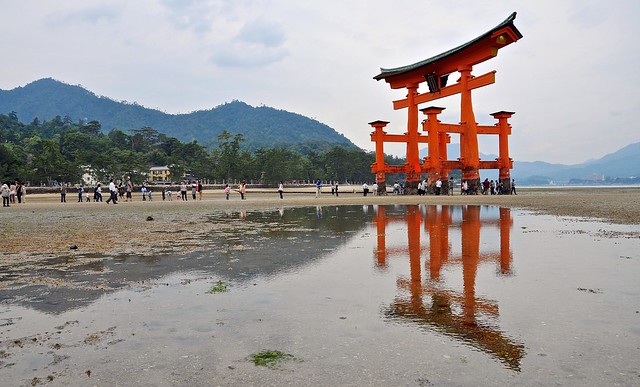 |
| At low tide you can walk out to the O-tori. |