Showing posts with label Korea. Show all posts

Saturday, 23 June 2012

Gimpo to Beijing to Hong Kong on Air China

I flew Air China in 2004, when I was living in Japan. An Air China flight through Beijing was, by far, the cheapest ticket from Kansai back to Canada. After taking the flight, I understood why: the armrest on my seat was duct-taped to the frame, they played movies that had been pirated from cinema by handi-cam, and they used the overhead speakers instead of headphones. The food was really bad, even for airline food. And that's without even talking about the Chinese passengers who spit into their cups throughout the eight-hour flight to Vancouver.

Fast-forward to 2012 and Air China has improved to the point it's essentially indistinguishable from any other generic international carrier. Sure, it doesn't offer the service or amenities of a non-budget Asian or SE Asian carrier, but it gets the job done.

My flight from Gimpo to Hong Kong, booked 3 days in advance, cost $270. That seems kind of steep, but keep in mind that it involved over 5-and-a-half hours of flight time. Of course, this involved a stopover in Beijing, whereas a direct flight would clock in at almost exactly four hours. Even so, it still  seems pretty steep for the region, but that was the cheapest I could find at the time.

Gimpo is the smaller airport for Seoul, used mainly for shorter flights, while Incheon is used for long-haul international flights. Gimpo is connected by subway, while Incheon is connected by express and commuter trains, making them both pretty darn convenient, although Gimpo is closer to the city and very convenient if staying in Hongdae.

Gimpo feels a little quiet and lacks the bustle and (duty free) shopping outlets one expects in international airports, but it was perfectly functional and modern.

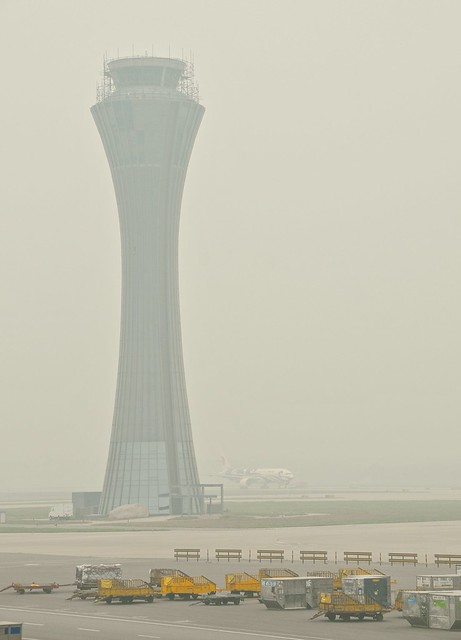
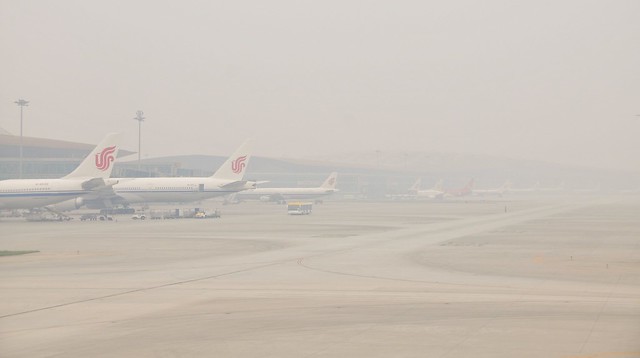
The smog at Beijing International seemed familiar from when I flew through there in 2004, but this time I have photographic evidence. It's pretty incredible, and I seriously doubt that the air-traffic controllers in their tower can always see planes that are on the runways or at the far ends of the terminal.

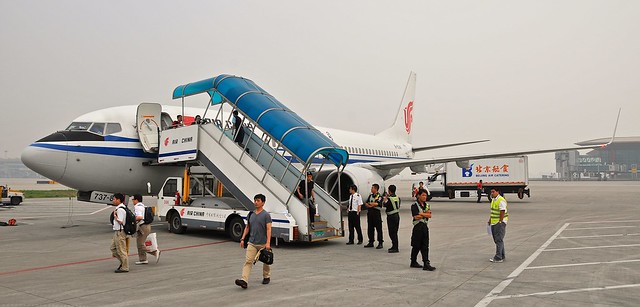
Deplaning in Beijing
Deplaning in Beijing.

Tower smog
The control tower is close, but already obscured by smog.

It's pretty ironic that I connected through Beijing on a flight booked so that I can receive a Chinese visa, especially since most nationalities can obtain a visa-free 72-hour stopover in Beijing so long as they have a connecting flight through the airport. So I ended up being stamped into China by immigration at the Beijing airport, while on my way to an embassy that would give me a visa so that I could be stamped into China.

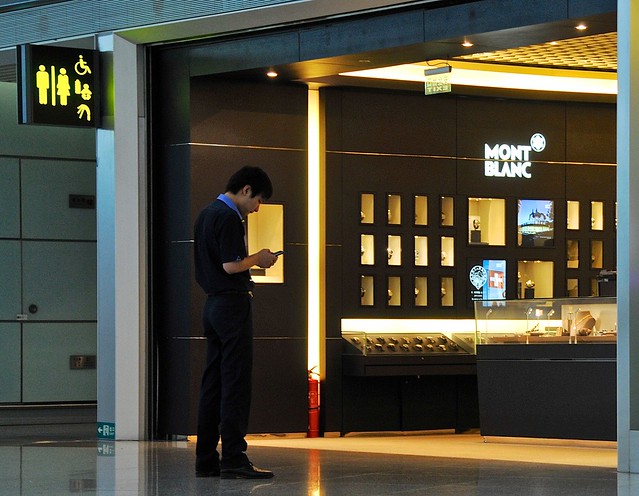
The terminal was virtually empty when I was there around noon, but the callow youth staffing the expensive luxury boutiques were doing their best to send text messages to their friends while ignoring the few people who did venture into their stores.

Montblanc attendant
Western brand, Chinese service.

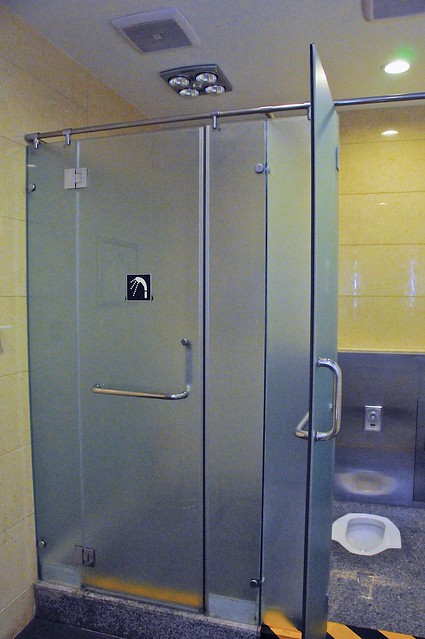
Showers in the airport
Free showers in the bathrooms, with heating lamps above! You've got to like that... but for some reason the bathrooms look much older than then airport.

Atmospheric perspective at Beijing airport
This is called atmospheric perspective, where things farther away are fuzzier and less well defined. It's usually seen between mountain ranges or hills that are farther and farther away, and not between airplanes at terminal gates.

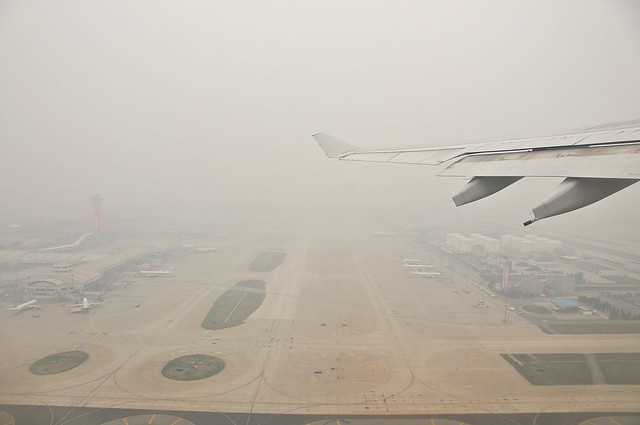
Visibility on takeoff
Visibility on takeoff. Where does the terminal end?

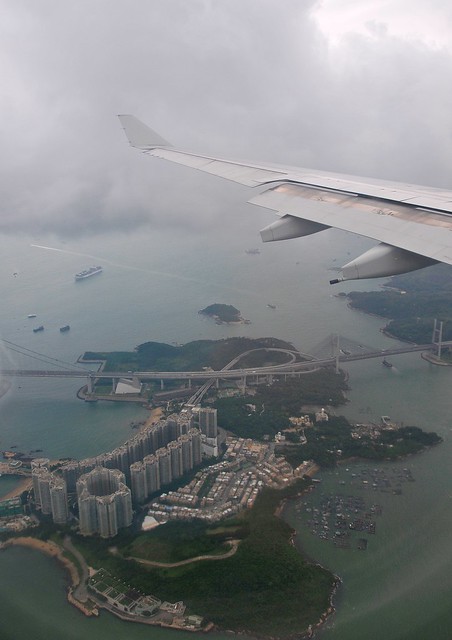
Visibility in HK is slightly better...
Hmmm.... visibility is just slightly better in Hong Kong.

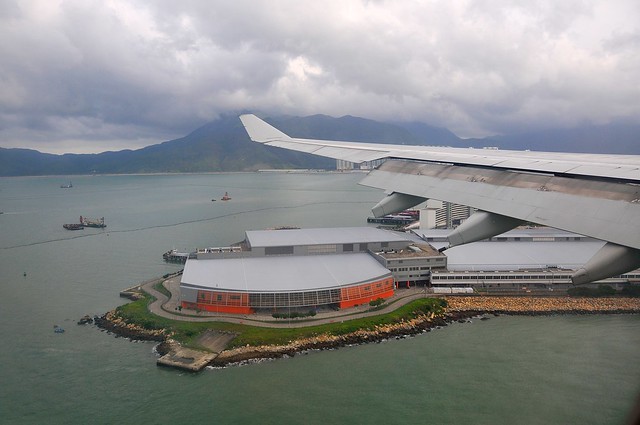
About to land
About to land on the airport's artificial island.

Touchdown.
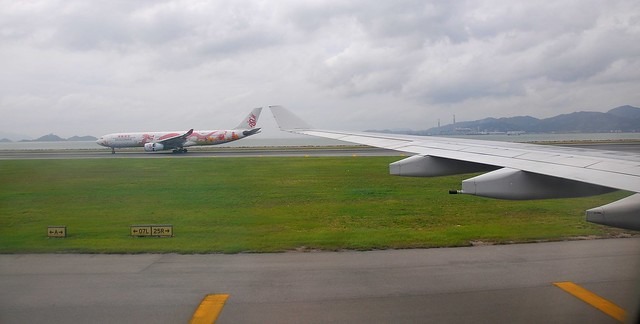
The symmetry between our winglet and the other plane's tail is completely accidental.


Friday, 22 June 2012

The DMZ & Seonyudo Park

The DMZ on the cheap

I was in Seoul; how couldn't I go to the DMZ? The best way to see it would be to take one of the tours offered by the USO, as these include narration by knowledgeable service members, visits to the Joint Security Area (JSA) of Panmunjom, the third infiltration tunnel, Dora observatory, and Dorasan train station. Unfortunately, this tour costs almost $100 and needs to be booked 5 days in advance. There are other tours that may be cheaper, but all of them that include the JSA (where you're right at the border and in the meeting rooms that straddle the border, face to face with North Korean and South Korean soldiers) are quite expensive and require advance booking for security reasons.

I decided to do the tour on the cheap, as I had read that you could do most of the tour on your own by taking the train to Dorasan station and then booking a tour offered by a Korean veterans' association next to the tracks. These tours include the third infiltration tunnel and Dora observatory, but not the JSA (and hence no pre-booking is required). The bus tour to these places costs less than 10% of the cost of tours including the JSA, as it was less than $10 (plus the cost of getting to Dorasan station). Details on this kind of DIY tour can be seen here and here: it looks like improvements have been made so you can take the train to Dorasan direct from Seoul station, as well as book your DMZ tour from on-board the train to Dorasan. It also sounds like the quality of the bus tour has been improved, which is for the best.

When I went to Dorasan and the DMZ, you had to transfer at Imjingang station (and show your passport) for a Dorasan-bound train. Actually, it involved two transfers, since you would take the subway to Munsan station, transfer to the train to Imjingang, and then transfer again to Dorasan. The new DMZ trains running from Seoul station (but also stopping at Munsan and Imjingang) look more convenient, if more expensive than the train I took. I'm not certain how often trains to Dorasan run now, as the DMZ train runs only once per day now, and if they have eliminated the other trains that do the limited run from Dorasan to Imjingang then the options are even worse now.

Entering the DMZ
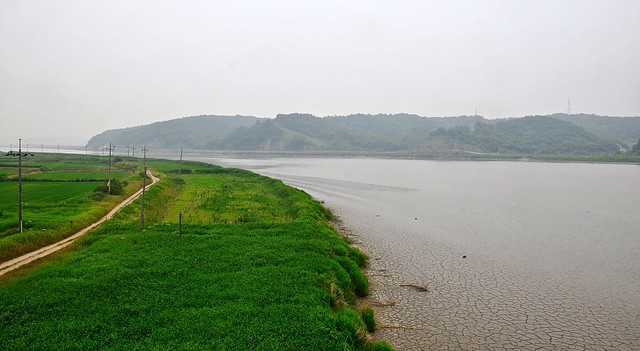
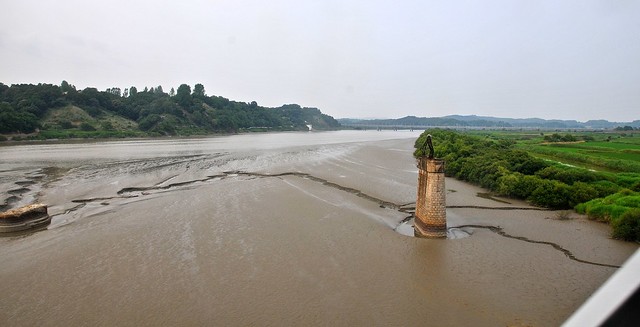
 Crossing the Imjingang river just before Dorasan Station.

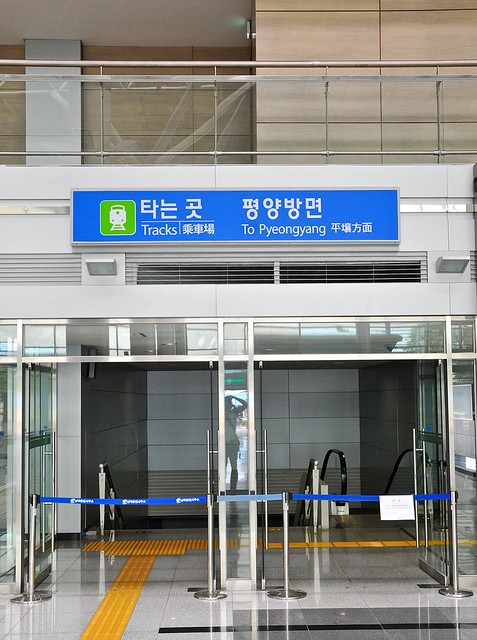
Gates for Pyongyang
For some reason the gate to Pyongyang was closed.

I bought my tour ticket after arriving at Dorasan Station. You have two options: 8,700 won for the base ticket, and 11,700 won if you want to take the short funicular train down/up the the third tunnel. Unless you're really out of shape, you don't need to spend extra.

The tour, given that it was publicly or quasi-publicly run, was really disappointing, and seemed similar to the scammy shopping tours that unscrupulous tour organizers run elsewhere (such as the super-cheap tours to the Great Wall at Badaling in Beijing). Again, this seems to have been improved since I did it, however.

As soon as the dozen of us were picked up from Dorasan, we were driven to a small souvenir market and restaurant, where we were left for over an hour. No English was spoken by the driver and there was no guide or audio narration of any sort—I had no idea of how long any of our stops were. When the bus returned, we drove at breakneck pace to the third tunnel, where we were again unceremoniously dropped off. 

The third tunnel is really interesting, especially if you are able to attach yourself to a USO tour like I did. The narration from the military members who give the tours is really good. Unfortunately, you aren't allowed to take pictures, but it's pretty interesting to hear how they detected tunneling. 

We then slalomed through the traffic barriers on the roads around the DMZ on our way to Dorasan Observatory, where we spent about 15 or 20 minutes. When he had decided we had seen enough, the driver came to shepherd us back to the bus.
Dora Observatory
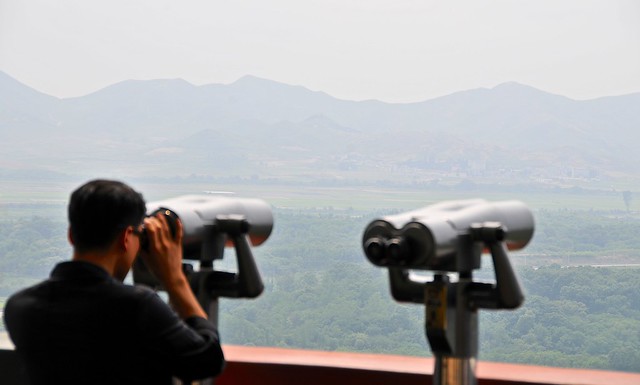
Dora Observatory. You technically aren't allowed to take pictures beyond a yellow line that is about 5 meters from the railing, but some people with cellphones or compact cameras did, anyway.

The DMZ is like a giant wildlife refuge: no one is allowed in, there is no human development or agriculture, and the area has been left to the forces of nature for the past 60 years.
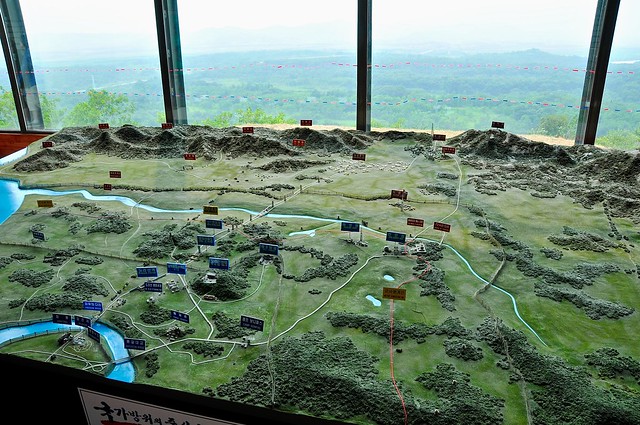
DMZ map at Dora Observatory
A map of the DMZ inside the observatory. They had some Korean-language audio in there, too.

Getting back on the bus, we again zoomed off, this time back to Dorasan Station. I had assumed that we had to hurry everywhere because of the time we spent at the restaurant and souvenir market meant that we would miss the return train unless we hurried, but we actually arrived back at the station about half an hour before the train left.

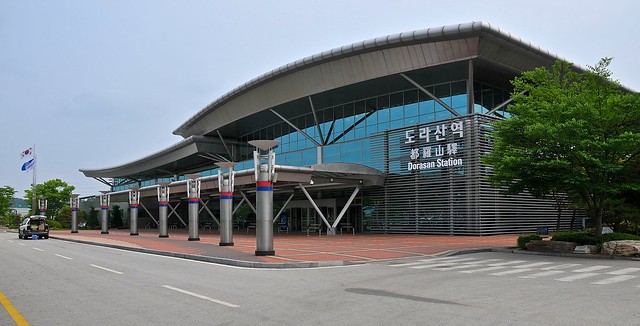
Dorasan Station exterior
The front of Dorasan Station.

_DSC1825
Track signage. Pyongyang's just around the corner.

Dorasan station billboard
Aspirational billboard.

Crossing river on DMZ train
Re-crossing the Imjingang river.

Even accounting for the kickbacks they get from the souvenir market and restaurant, the pace of the tour didn't make a lot of sense. Although it sucked a lot more than it should have, it was still worth the low price (and for me the JSA isn't worth the extra price), and is likely a much better experience today.

Seonyudo Park

Seonyudo Park is on an island in the Hangang River, which runs through Seoul. It used to be a water treatment plant, but the spaces have been re-purposed into gardens, parkland, and exhibition spaces. It's a nice place to spend an evening—I headed there after my return from the DMZ—although I believe it gets quite busy on the weekends.

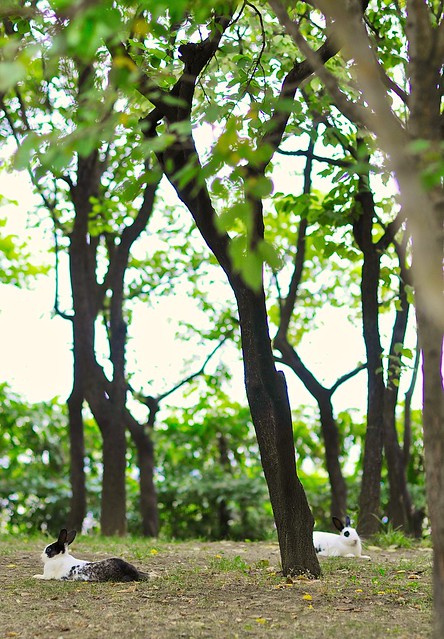
Bunnies in Seonyudo Park
Bunnies in the park.

Picnic pavilion

Skyscrapers through pavilion

_DSC1850
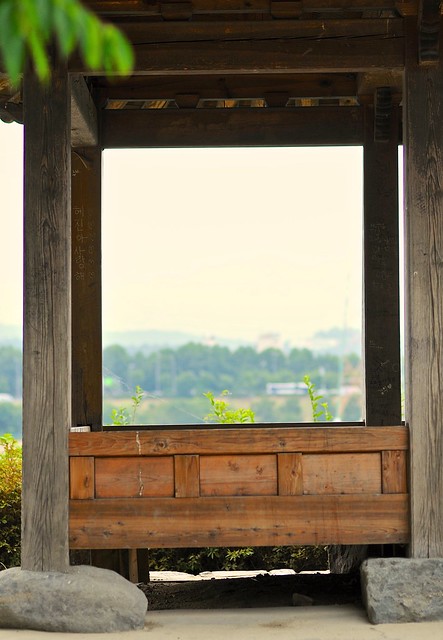
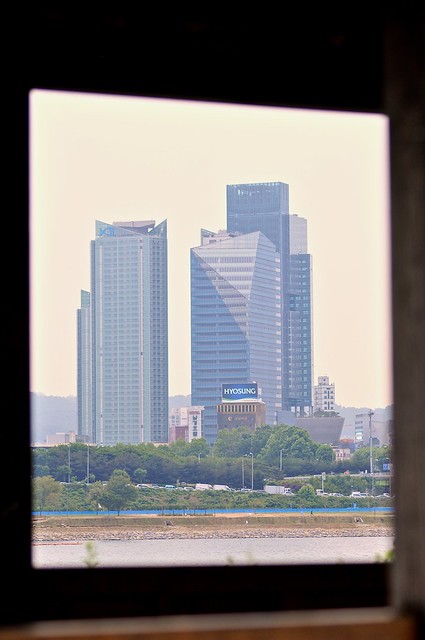
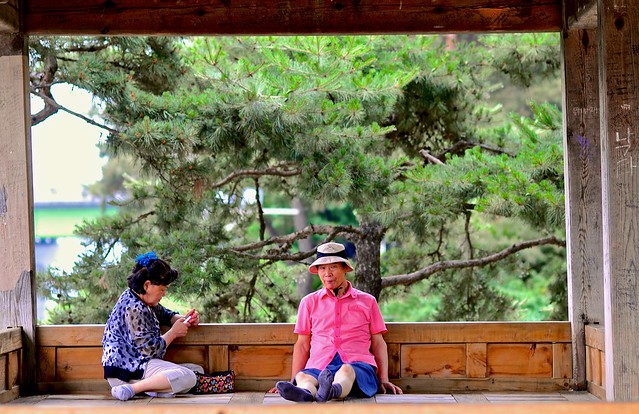
There are a number of picnic pavilions throughout the park.

The old settling tanks
Much of the industrial infrastructure remains. This settling tank has been turned into a sunken garden.

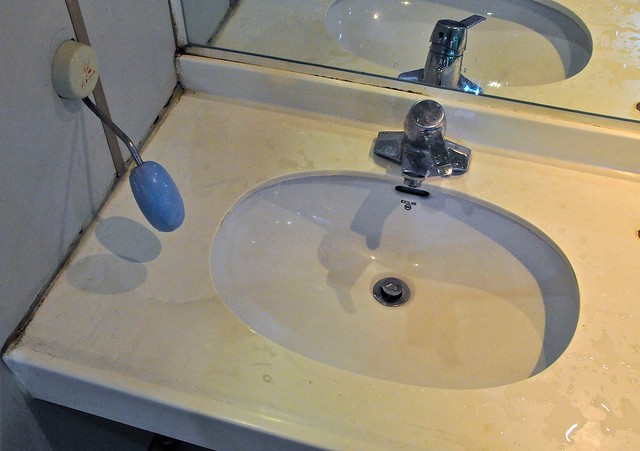
Soap on a stick
Koreans do public bathrooms pretty well: there are a fair number of them, and they have western toilets, even if they're not the cleanest. I'm a big fan of the soap on a stick.

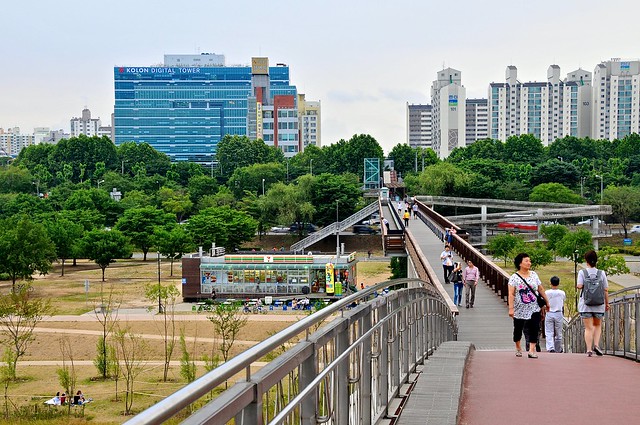
Bridge from island
The island is connected to the city by a pedestrian bridge. I like the idea of 7-Elevens in the middle of parks.

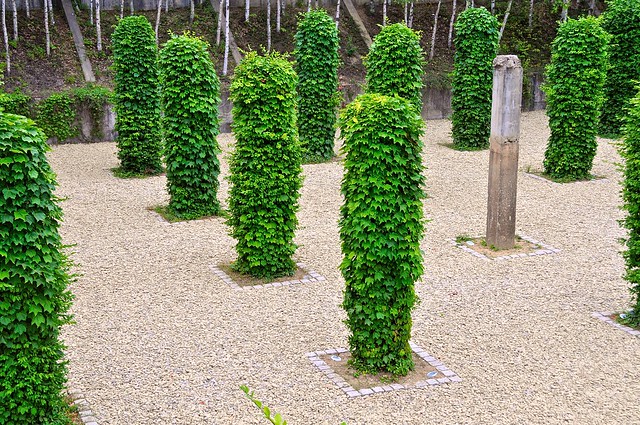
_DSC1883
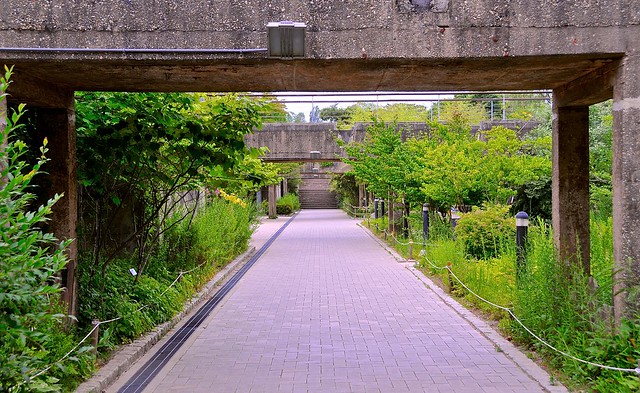
Ivy covers half-demolished concrete poles. The arrangement reminds me of the Garden of Exile in Daniel Libeskind's Jewish Museum in Berlin.

Seoul & its Palaces

Rolling into Seoul over the Hangang
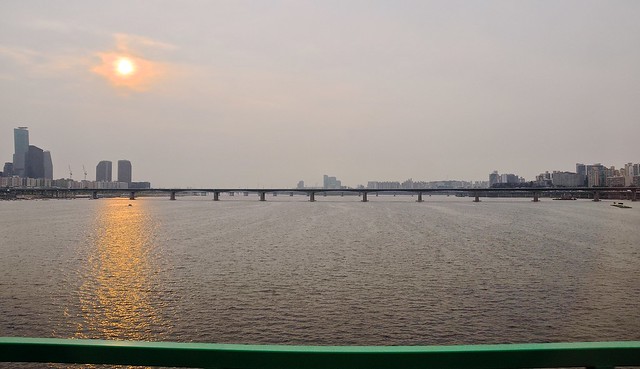
Rolling over the Hangang river and into Seoul via KTX.

Seoulwise—a great non-partying hostel in Hongdae

Hostels in large, popular cities are essentially fungible, and don't really need reviews or descriptions unless they're pretty exceptional. And usually, exceptional means they're exceptionally bad. Seoulwise is an exception, as it is one of the best-run hostels I've ever stayed at.

The big reason for this is the owner, Mr. Young, who is basically there all the time and knows everyone who is staying there. As someone who has traveled a lot himself, he has a good understanding of what travelers want. Young manages to treat everyone like they are actually his guests, and not just customers, going the extra mile to help everyone out and make sure everyone is able to do what they want to do in Seoul. This leads to a very friendly atmosphere in the common areas, since he acts as glue and bonds everyone together through his friendliness and engagement with everyone. Personally, I was worried about the location of the hostel, since Hongik University is a notorious party place. Despite this, Seoulwise doesn't have a party-all-night atmosphere (which I appreciated... getting woken up at 3am by drunken revelers is no fun). Possibly a factor in this is that the proprietor doesn't let non-guests into the hostel rooms, and since he knows everyone it's easy for him to enforce.

In terms of facilities, it's got a full kitchen, two computers with fast internet service, and en-suite bathrooms in every room (but no bathrooms outside of the rooms, so no luck after you've checked out). There's free breakfast (toast, cereal, and coffee) and you can borrow an electronic subway card you can load up for cheaper fares.

When I was in Seoul, it was still a few weeks before Psy's Gangnam Style had dropped. One of the most popular song's I heard around town was Brave Guys' I 돈 Care (I Don Care)—there's a pun there, as "don" means "money" in Korean. Young told me that the Brave Guys were most famous as comedy singers, and if you see the lyrics in translation they betray surprising satirical depth.


Chinese and Mongolian Visas

I had hoped to get a Chinese visa in Korea, which would allow me to take a ferry from Seoul/Incheon to Qingdao, and thus avoid flying anywhere. I soon discovered that the Chinese Embassy in Seoul does not issue visas to anyone other than those who are residents of Korea (Korean nationals and foreign residents). This seems to be an increasing trend, as the Chinese are making it difficult to obtain visas to visit, especially if you are planning on visiting Tibet or Xinjiang. Other embassies seem to have similar policies—at least officially—but the Embassy in Korea actually follows it.

With the Chinese visa not an option in Seoul, I had to figure out where I could get one. The obvious option would be Hong Kong, but even the official High Commision website says that "'[a]pplicants who do not enjoy HK resident status should apply for visas with the Chinese Embassies or Consulates General in their countries of citizenship or residence." Despite this ominous sounding warning, it turns out that tourists have no problem Chinese visas in Hong Kong, especially if the apply through a visa agency.

My next stop after Seoul would therefore have to be Hong Kong, so I was forced to break my no-flying rule quite early in my trip.

Since I still needed a Mongolian visa, I decided to apply for it in Seoul. The process was simple and straightforward, as you just go to the embassy with your passport photos and apply. The only complication is that you have to apply in the morning, and part of your application is the payment receipt you get from paying into their account at a local bank. This means you need to give yourself enough time to complete the application, go to the local bank (just next door), make a payment at the bank, and then return to the embassy with the payment receipt. Do this, and you get your visa two days later. Applications are dropped off in the morning and pickup is in the afternoon. Once you get the visa, you have 90 days to enter Mongolia, and it is good for 30 days after entry.
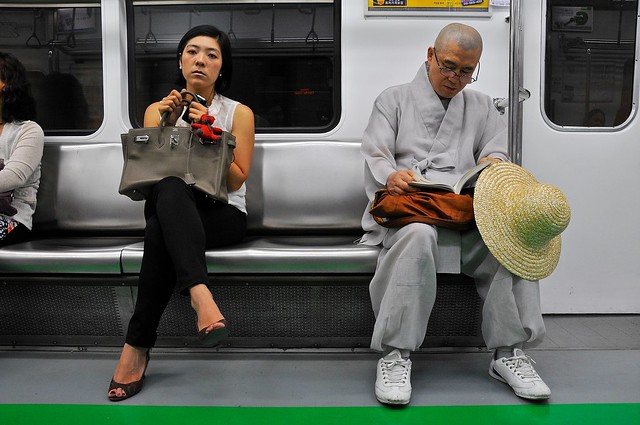
Monk on subway in Seoul
On the subway to the Mongolian Embassy.

Korean War Memorial

It's called the War Memorial, but it's really more like a museum, and a great museum at that. They have tons of aircraft, ground machines, and even boats on display, many of which you can enter or at least peer into. It's like the Air & Space Museum in Washington, DC, but dedicated to military vehicles and not air- and space-craft.
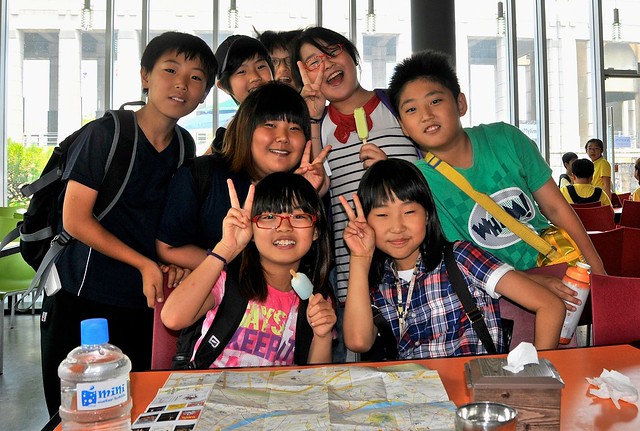
School kids at War Memorial
A group of super-friendly primary-school kids came to talk to me in the cafeteria as I was cooling off and figuring out how to get to N Seoul Tower. Their teacher came over to talk for a minute or so, and then the kids invited me to visit their school in the suburbs.

Thursday, 21 June 2012

Let's Climb a Mountain! Bukhasan without the crowds.

I enjoyed walking around Mount Geumjeongsan in Busan, and since Seoul also has some highly-accessible mountains I decided to give Mount Bukhansan a try. It took me some time to find good information on how to get there, so it was pretty late in the afternoon when I set out—it turns out that this is the secret to avoiding the crowds.

To get to the starting point at the Bukhasan National Park entrance on the Western edge of the mountain, you take the subway to Gupabal station, leave by Exit 1, and then take bus 34 or 704 until they announce Bukhasan. There's a good chance you can simply follow the people in hiking gear from the subway station.


By the time I arrived at the park entrance (no admission fee required), it was well after 4:00. Sure, it was the June 21—typically the longest day of the year—but it was understandably later than most people chose to start going up the mountain. this actually turned out to be a big advantage, as I only encountered one other person on the way up, only passed a few on their way down, and had the summit entirely to myself for the half hour or so I was up there. Normally this trail is extremely popular, and there are literally hundreds of people at or near the summit.

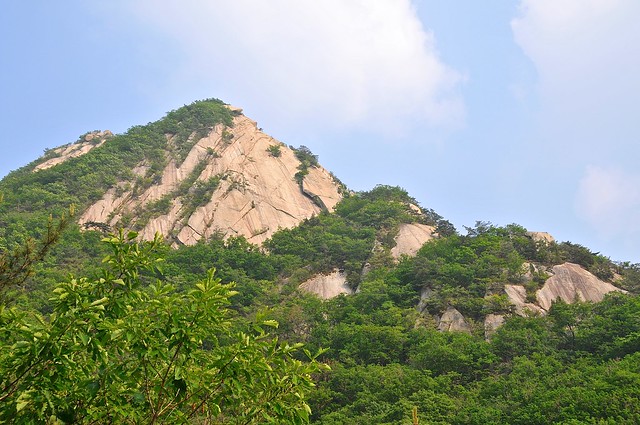
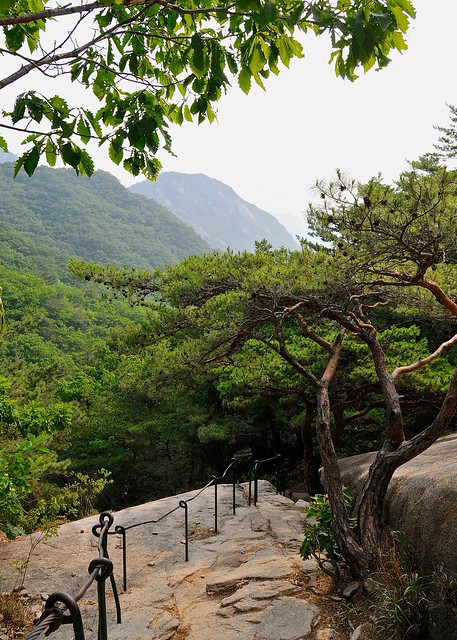
The path to Baegundae Peak is well marked—something of a surprise after Busan and Mount Geumjeongsan. There are updates every 500 meters or so. For the first half the climb is pretty gentle, but in the latter half it escalates into metal staircases, rocky steps, steps cut in the mountain, and then rocky scrambles across the granite mountain with steel-cable railings to support yourself.

Midway up Bukhasan
It's 5:10 and I'm midway there.

Looking back over railing from midway
Looking back down, from a little farther up.

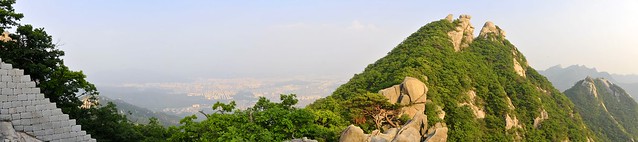
Mini panorama with fortress wall and city
A panorama of the fortress wall, the city, and the mountains, just before the final push.

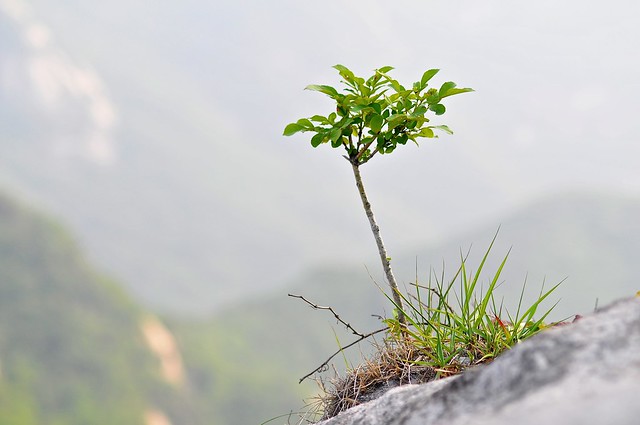
Sproutling on Bukhasan
A sproutling gains a foothold on the mountain.

Near the Summit, with city and cable railing
We're getting close, now.

Summit from below in the warm evening sun
Baegundae peak is within reach.

_DSC1733
I've got the summit to myself. Apparently not many people reach the top at 6:40 pm.

_DSC1724
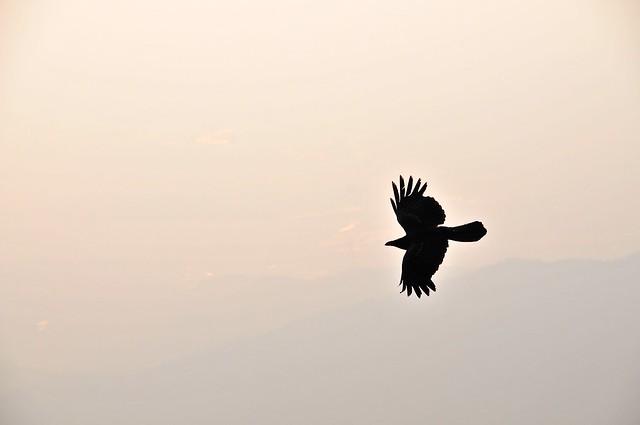
I only have to share it with the crows, who do noisy flybys to let me know of their presence.

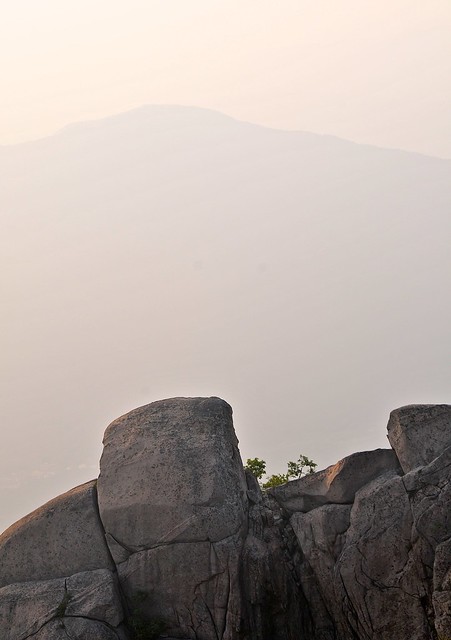
Rocks and hazy horizon
On the way down.

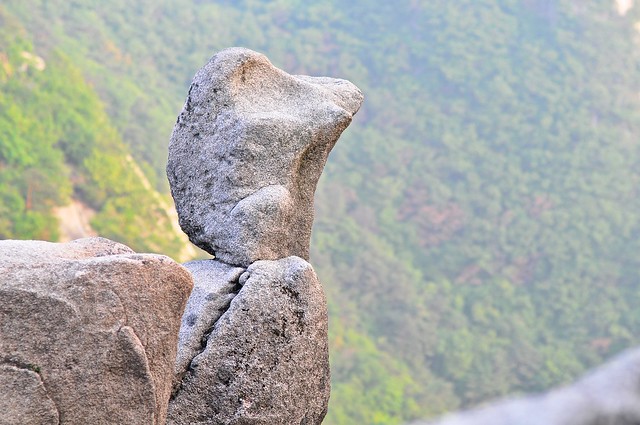
Duck's head
Duck-headed rock surveys the mountains.

Bukhasan panorama with glimpse of fortress wall
Instead of heading down the mountain to the right and the Bukhasan Park entrance, I went down to the left and the Jeongneung Information Center.

I descended through the eastern slope of the mountain, ending up at the Jeongneung Information Center. This path is less steep and more gradual. From Jeongneung you can get back to the metro by taking bus 110B or 143 to the Gireum metro stop.


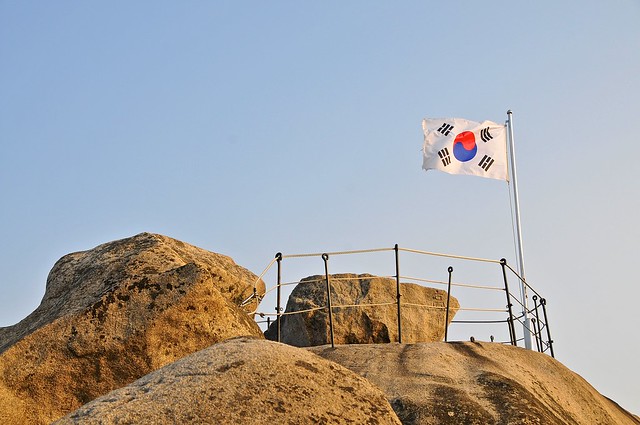
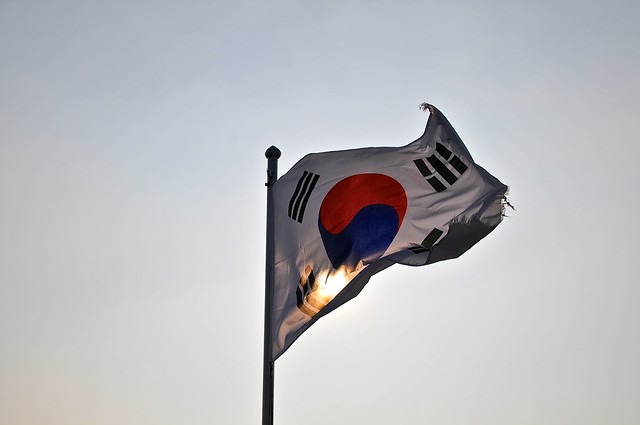
 Summit flag

Monday, 18 June 2012

Busan

Welcome to Korea: desolate shops and sewer smell

It was Sunday morning around 8:30 when I left the ferry terminal and began to walk to my hostel, the Apple Guesthouse. The route from the ferry terminal to the hostel runs along a subway line, but I had no won and I like to walk, so I walked there. I walked in the underground malls that surround the stations, much as they do in Japan, but the contrast with Japanese subway malls was striking. Japanese subway malls are always brightly-lit, busy, and the stores are typically convenience stores, food stores (bath takeaway and with seating) and the odd boutique. In contrast, these Busan subway malls were dead. Stores were shuttered, and there were lots of stores that looked like they were selling discount clothing and cheap shoes. In Japan I think these locations are high-rent and demand high turnover. In Busan, they looked like the stores you see in ghost malls, and in all honesty the effect was almost communist, as though these shops were propagandistic proof that Korea could achieve the same things as Japan. It was very weird.

Busan subway mall
Subway mall during one of the busier times.

Apple Guesthouse was brand new when I visited, and it had accent walls painted in an attractive apple green colour. The rooms were a little small, but everything was nice, they had a couple of laptops that guests could use, and the location was great. The toilets gave me a bit of pause, however, as there was a persistent sewer smell in one of them, exacerbated by a steel access door in the wall that wouldn't close properly and which seemed to be the source of the smell.

I soon learned that sewer smell wasn't a hostel problem, and it wasn't an isolated problem. Indeed, you're likely to encounter sewer smell everywhere in Korea. It turns out that they basically have open underground sewers—think of storm sewers that contain actual sewage and not simply runoff water. I began to notice this when I started walking the surface streets, as you notice odoriferous hotspots as you walk around. You then begin to correlate these hotspots with sewer gratings, and then notice that most of these gratings have been covered with heavy rubber mats. These mats are intended to minimize the odor leakage, but they don't do as good a job as one would hope. As a result, sewer smell is persistent throughout Korea.

Korea feels rougher and wilder than Japan. Less inhibited and less refined. Definitely less regulated, both socially and legally. Lots of restaurants near Jagalchi seem to do part of their food prep in the alleys next to and behind their shops, which is definitely not something you would see in Japan.

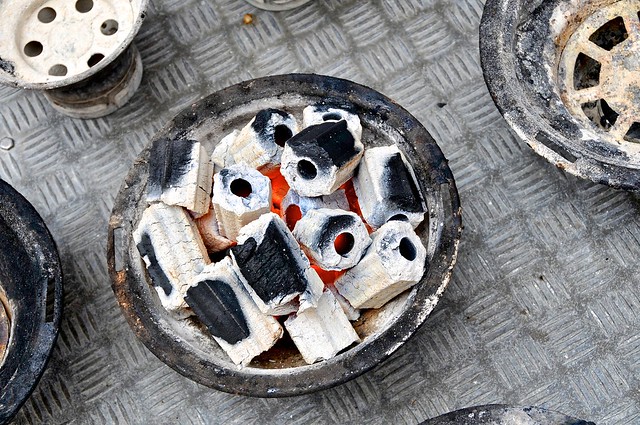
Coals in alley
Dishes of hot coals in the alley, ready to be delivered to customers so they can cook their food.

Jagalchi Fish Market

Koreans love fresh seafood, and they seem to place a greater premium on it being freshly-killed than the Japanese do. One of the most notorious examples of this would be the famous squid-eating scene from the original Korean version of Old Boy:


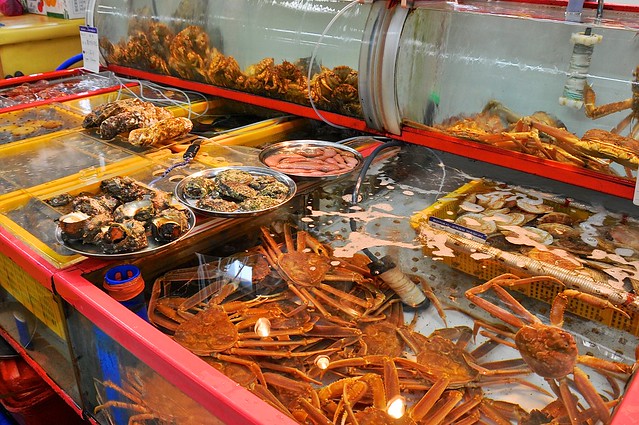
Jagalchi offers a huge variety of live seafood in tanks and tubs, in a fairly compact multi-level market (it's about the size of a football field, and not the sprawling wholesale complex that Tsukiji is). There are restaurant areas with food-court style seating where you can eat your freshly slaughtered food. From a tourist perspective, I think it's much more interesting than Tokyo's Tsukiji fish market, which is more about the massive volumes of limited varieties of largely dead and frozen seafood. Tsukiji gives you a glimpse inside the business of seafood restaurants, while Jagalchi shows you a broad spectrum of seafood and what they look like alive. if you actually wanted to eat seafood, perhaps you might be concerned about the hygiene standards at some of these shops—especially if you were coming from Japan—but it's not something I had to think about.

Outside of the market you can also find stands full of dead fish and seafood. Although I'm sure it is fresh, I would be wary of buying from these stands in the afternoon of a hot summer day.

Jagalchi market
Jagalchi market.

Basket of octopuses
Baskets of small octopus and molluscs on the floor.

Crabs and stuff
Crabs.

Snails at Jagalchi
Molluscs, both familiar and exotic.

Octopuses have to penned in
You've got to keep a tight lid on the octopus tanks.

I always feel self-conscious taking pictures in markets, especially when using a DSLR. To a certain extent it feels like you're treating you subject as though they are some exotic display in a human zoo, or that you're interfering with their business. In these contexts I think a decent smartphone would actually be better, as people everywhere (at least everywhere there are smartphones) take smartphone pictures of everything, and no one thinks anything of it. This explains why my pictures of markets—and people—are typically pretty crappy.

Sunday, 17 June 2012

I'm on a boat: Hiroshima to Busan by fast train and slow boat

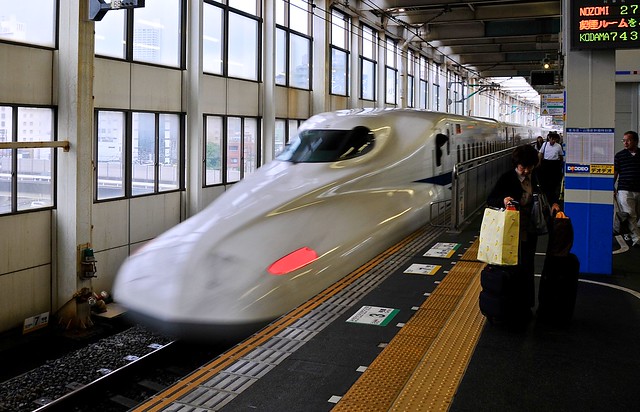
I didn't make a seat reservation on the shinkansen to Shimonoseki: I simply showed up and sat in an unreserved car. The shinkansen is really expensive, but with the combination nikkan kyodo kippu ticket, the price was more reasonable. I also wanted to be able to compare the Shinkansen to the Korean (and possibly Chinese) fast trains. The train is fast and comfortable. In a flat and open environment the shinkansen would be OK for actually watching things go by, but in mountainous and cramped Japan, where there are few open vistas to enjoy, the sheer speed makes too much of the scenery a blur to properly enjoy. It's still a pleasurable experience —much better than flying, in my opinion—and like so much of Japan it's calm, quiet, and efficient.

Already a blur
Still in the station and already a blur.

The shinkansen doesn't actually stop in at Shimonoseki station. To get there, you have to either get off at the stop before (Shin-Shimonoseki, if coming from the north) or at the the stop after Shimonoseki (Kokura, which is actually in Kyushu), and then take the local train to Shimonoseki. From the station it's a short walk to the ferry terminal, on an elevated walkway. You will pass by a department store (there's always a department store next to a train station of any size), which is a good place to spend your remaining yen and pick up snacks (department stores always have supermarkets in their basements). But be sure to keep some yen to pay the port fee and fuel surcharge (the port fee is currently ¥610 per passenger, and the fuel surcharge is ¥1,200—when you buy your ticket you should clarify with your booking agent whether you'll have to pay the fuel surcharge when you check in), as they will only take cash. You could also check in first then go back to the department store to spend your remaining yen.

Map from Shimonseki station to port.

Ferries also run from Shimonoseki to Qingdao (close to Beijing) and Suzhou (close to Shanghai). If you have a Chinese visa and don't mind skipping Korea, these may be interesting options.

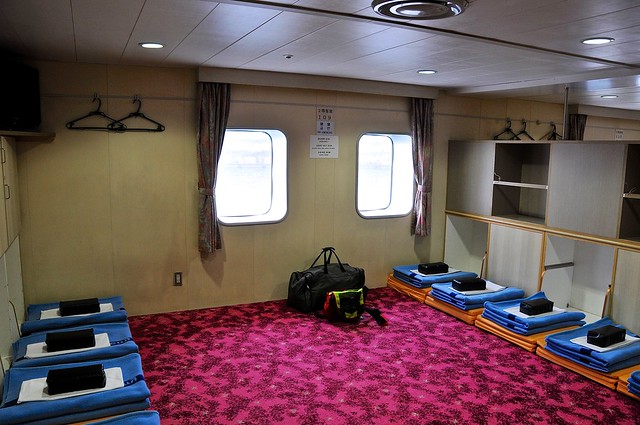
Ferry cabin
Second-class cabin for men. The wall on the right separates this room from the other second-class cabin, and is open at the top. I believe there is only one female second-class cabin.

I was the first in my cabin, and was later joined by two Koreans. On the other side of the room, across the partition that divides it into two cabins, are three or four Japanese. I suspect that they segregate passengers based on nationality: Koreans in one cabin, Japanese in the other. As a foreigner, the Japanese staff in Shimonoseki put me in with the Koreans. I wonder if I would be put in with the Japanese had I been traveling in the other direction (actually, I suspect Korean staff would care less, and might not even segregate at all, as Japanese strike me as more insular).

I don't believe the two Koreans in knew each other before the trip. Nevertheless, they somehow decided that it would be a good idea to get up at 3:30 am and have a loud chat. I actually woke up from this, and even me sitting up and staring at them had no effect. I finally had to point at my (non-existant) watch and complain that it was three O'clock in order to convey my displeasure at their conversation. Weird.

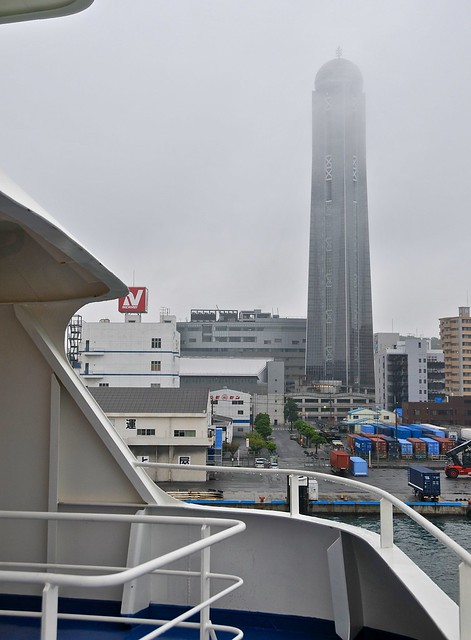
Kaki Yume Tower
The Kaikyo Yume Tower, supposedly the tallest in Western Japan. I believe the word you're looking for is 'meh.'

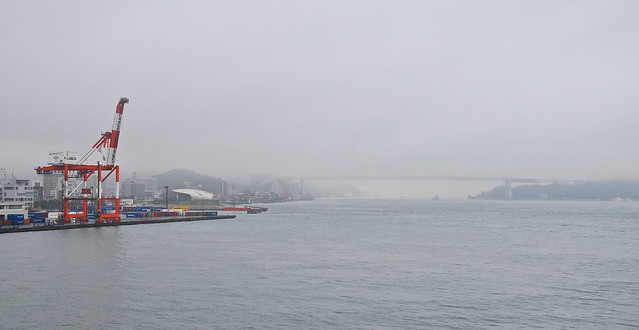
Bridge between Honshu and Kyushu
The main island of Honshu (left) and the southern island of Kyushu are surprisingly close.

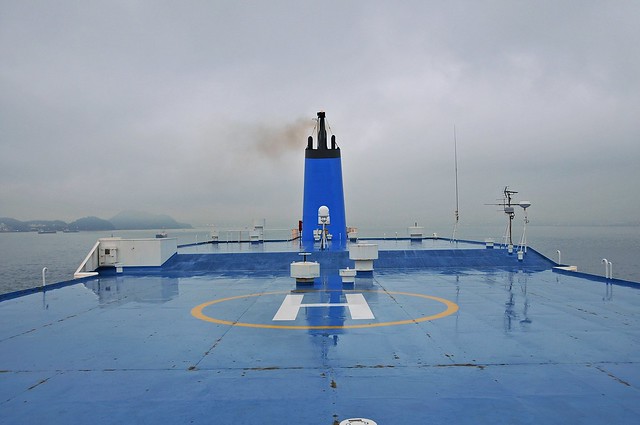
Looking back over ferry deck
Looking back over the top deck of the ferry.

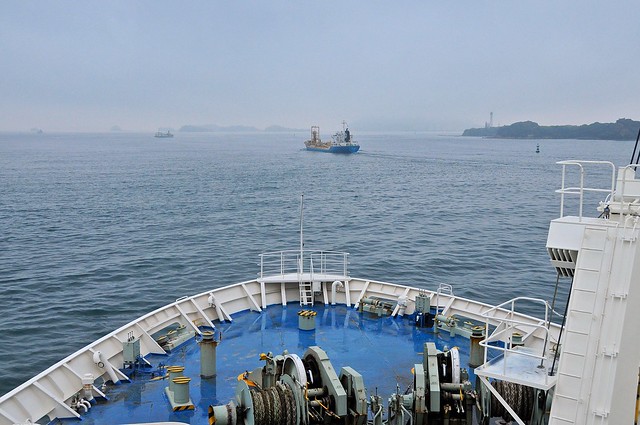
Leaving the channel
Leaving the channel separating Honshu from Kyushu.

Darkness falls
Darkness falls.

The ferry was virtually empty. They had a restaurant, but I had managed to spend all of my yen before leaving Japan, and I had no won.Thankfully, I spent my last yen on food and drink.

The ferry has Japanese-style o-furo baths:large communal tubs of water, with spigots, stools, and hand-held showers surrounding it so you can clean yourself before getting into the pool to soak. I think I was the only one to use it. It was quite nice to soak in the bath and look out the window while the ship gently rocked.

The on-board bath.

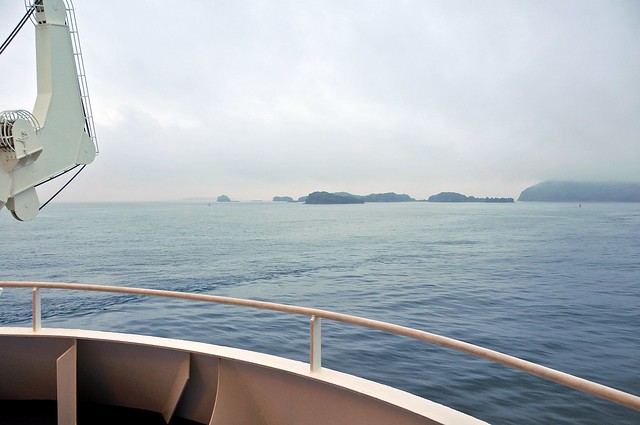
If you wake up early enough, you'll find the ship laying in anchor outside of Busan harbour. The ferry must arrive in the middle of the night and then wait, allowing passengers to sleep, before entering the harbour and docking at a more sensible hour (about 8:00).
 
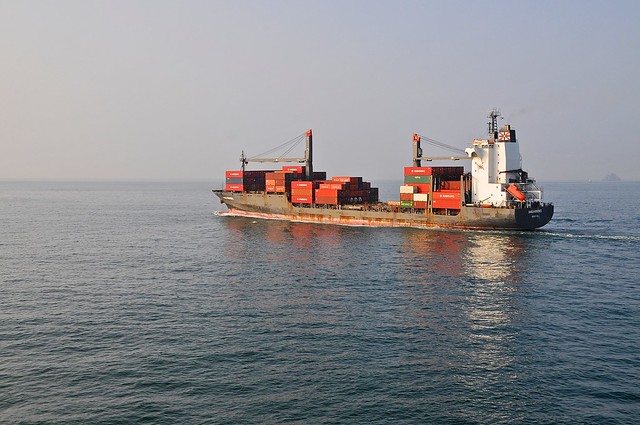
Laying anchor
A cargo ship steams past as we lay anchor.

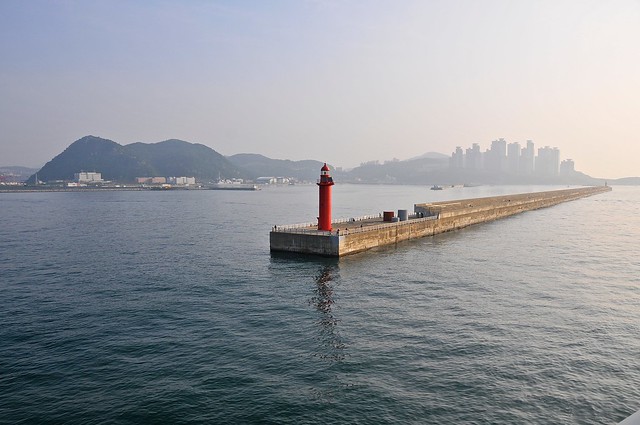
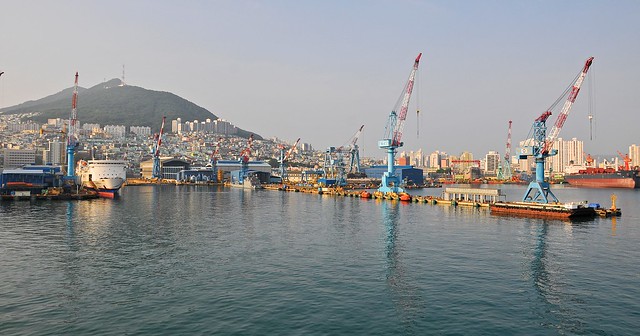
Entering Busan harbour
Entering Busan harbour.

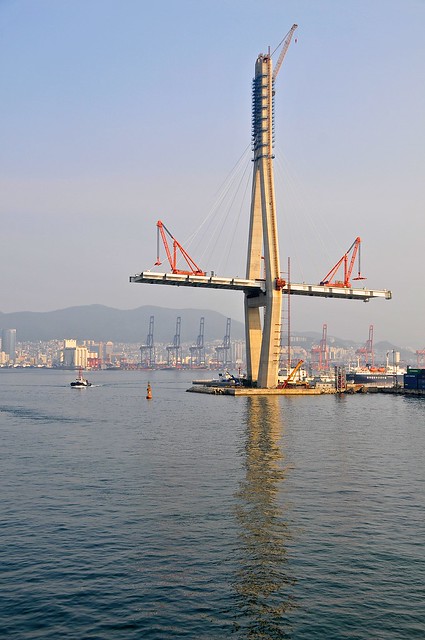
Bridge in progress
Bridge in progress.

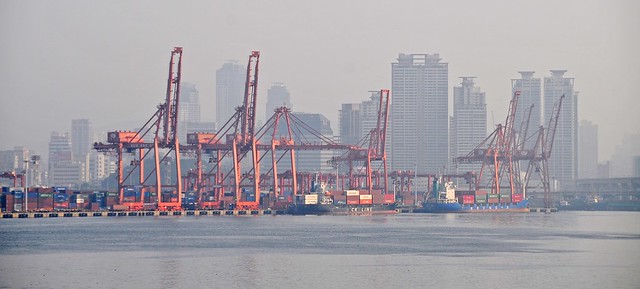
An industrial town
You're constantly reminded that this is an industrial port.

Cranes near the port
Near the dock.


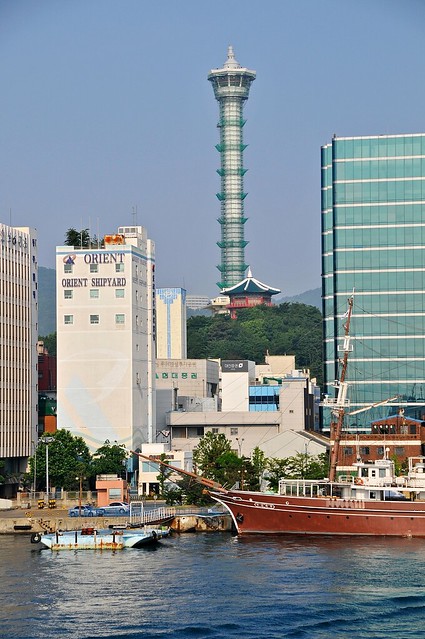
Busan Tower
Busan Tower looks more like bamboo than the Taipei 101 does.

Customs and immigration at the port was quick and easy, and the port is in the middle of town. It was a 30 minute walk to my hostel, and maybe 5 minutes to Busan station, and about 2 minutes to the nearest subway station—the port is very conveniently located.