Showing posts with label train. Show all posts

Wednesday, 14 November 2012

Modern Mary & Ancient Merv


The train arrives in Mary at around 2:00 in the morning, and we I pile off the train with a bunch of locals. It's quite cold, and at first I'm a little worried because no one exits through the station building, but from the ends of the platform. On the western edge of the station building is a small, semi-enclosed area full of vendors selling hot snacks, and I stop there to grab a fried pastry.

Thankfully, the station building was open, and there were lots of people milling about inside, presumably waiting for the next train. I find an empty bench and sit down and lean back to get some sleep, but a security guard approaches me. I figure he's going to tell me I can't sleep here (none of the locals seem to be asleep), but in reality he's just telling me to watch my stuff to make sure no one takes it. I'm a little surprised by his concern, but thankful.

It turns out that I could have taken an early-morning train to Bayram Ali, which is the town just south of the monuments at Merv, but since my plan was to exit to Iran via Serakhs the next day, I was planning on staying in Mary for the night, as it supposedly had a cheap hotel. A few hours later, when the sun was up, I set out to find the Hotel Caravanserai, which was described in the Lonely Planet. unfortunately, the map of Mary in the LP was almost as bad as not having a map at all, as it included streets that didn't exist, and pointed to the Hotel Caravanserai as being in the wrong location. I ended up wandering around some random streets until I ultimately got within a couple of blocks of where the hotel was supposed to be. When I though I was on the right street I asked some local shopkeepers where it was, but they hadn't even heard of it. Thankfully, a passerby heard my inquiries and told me they would take me there. It turned out to be on a small side street, less than 200 meters from the shops where I had been asking, but it had no sign on the outside and appeared to be just another house. Inside the compound, it was really arranged almost like a modern caravanserai, with rooms around around the perimeter of a courtyard (admittedly this is a pretty common layout in many places in the world).

I thanked the good Samaritan, and as I entered the hotel to try and find the receptionist or proprietor I was greeted by a couple of guys staying in one of the rooms by the entrance. They invited me to stay with them in their room, and they told me that I could stay with them for free. I later understood that this meant hiding me from the owner, and pretending that I wasn't there, which meant I had to sneak to the bathroom which was located further into the main courtyard. Well, that was fine with me. After dropping my stuff off and having a quick shower, I left to take a look around Mary and go to Merv.


How to get to the Hotel Caravanserai from the train station. There are reports that the hotel may be closed, but that may also just be local misinformation.
_DSC6376 - _DSC6377
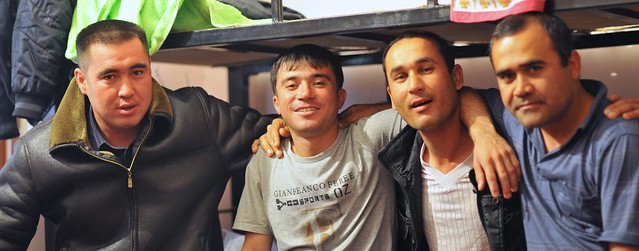
The local workers (welders) who invited me to stay in their room in Mary.

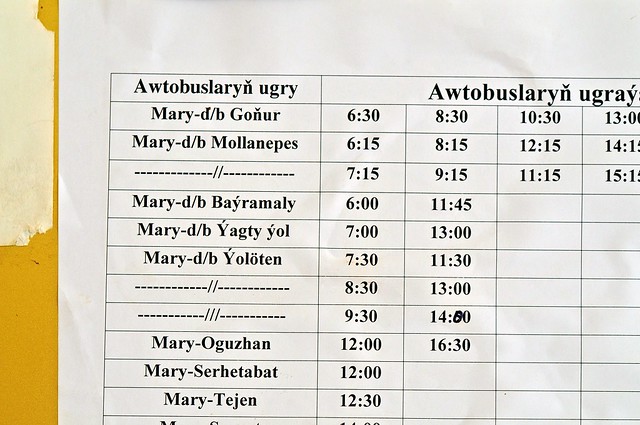
I didn't see too much of the town, but I found out from the bus station (just across from the train station) that there was a bus going to Bayram Ali at 11:45.
_DSC6379
Bus schedule from Mary. The 6:00 bus to Bayram Ali is convenient for those not staying in Mary (the local train at about the same time is probably even more convenient). Gonur is north of Bayram Ali, so those buses probably come close to Merv and may even pass near the entrance gate (but it's also possible they turn north before reaching Bayram Ali/Merv).

_DSC6378
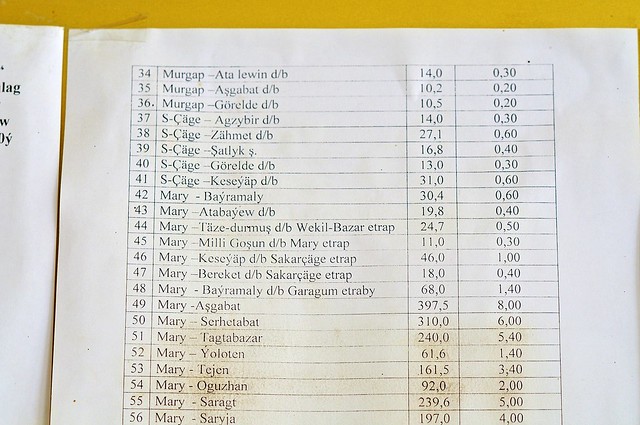
Fare sheet, showing the distance in kilometers followed by the fare in manat. 400km to Ashgabat is 8 manat (same as the sleeper train), or about $2.80.

I hopped on the slow 11:45 bus and we dawdled our way east to Bayram Ali. As we got closer and closer, I was increasingly alert for any signs of old walls or any indication where I should get out. I eventually made the right call and got out just before the bus was about to make a turn into Bayram Ali, not far from the Abdullah Khan Kala (infuratingly, the LP map shows the edge of the Abdullah Khan Kala but doesn't show the adjacent roads which would illustrate just how close Bayram Ali is to the sites).

Once again the Bradt map trumps the LP version (though it still doesn't show canals that may impede or prevent progress). The bus from Mary turns right at the corner by the bazaar, on the road headed to Turkmenabat, and that's where you should get off. Taxis back to Mary leave from about where the arrow to Mary is.

Merv

Merv owes its existence to the Murghab River (a different Murghab River than the one we say near Murghab, Tajikistan), which brings water from the Afghan mountains and unceremoniously dumps it into the arid Karakum desert near Merv. Because the Karakum is flat, the Murghab River spreads itself into a wide delta here, and this fertile delta is what is responsible not only for Merv but for the even older Bronze-Age site of Gonur Tepe to the north (possibly the birthplace of Zoroastrianism, the first monotheistic religion), as well as the modern cities of Bayram Ali and Mary.

However, because of the flatness of the desert, it's easy for delta channels to dry up and new channels be formed. These wandering channels led to wandering cities, as settlements would follow the water over time, with the result that instead of cities being rebuilt on top of each other, we have a succession of ancient cities being built next to each other. There are two such cities in Gonur Tepe, and five different cities in Merv.

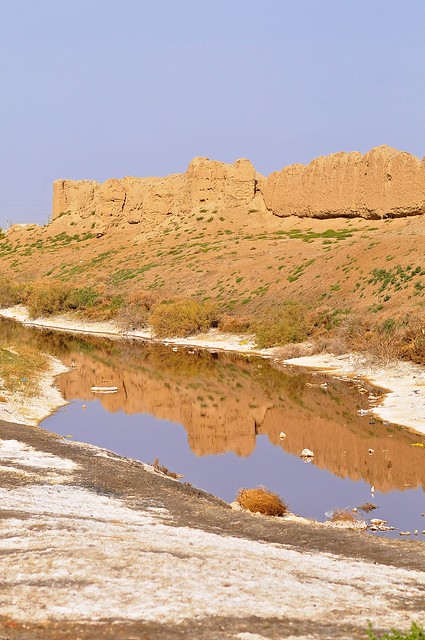
One of these cities is the Abdulla Khan Kala, a Timurid city founded by one of Tamerlane's sons after the end of Mongol rule. Abdullah Khan Kala suffered from a lack of attention after the Timurid king decided on Samarkand as his capital. There's a moat surrounding the Abdullah Khan Kala, which is basically a huge square compound, of which nothing remains except the brick-faced rammed-earth walls: inside there is just a vast expanse of dirt and some hardy weeds, and maybe the odd goat or two. Even less remains of the the Bayram Ali Kala—the last of the five ancient cities of Merv and which was a western extension to the Abdullah Khan Kala—as apparently it was being used as a source of bricks when the Russians arrived in 1885.
_DSC6382
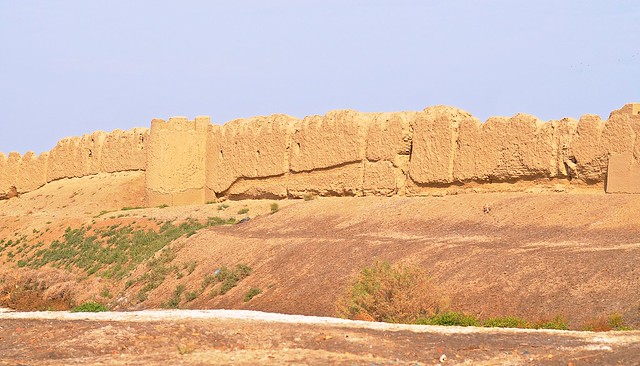
The western walls of Abdullah Khan Kala, from near the Bayram Ali bazaar.

_DSC6383
Maybe "moat" is the wrong word. It's more like a ditch.

Thursday, 20 September 2012

Back in Almaty

I returned to Almaty with a broken Kindle and without my iPhone. This meant I had no internet-capable device, and no handy way to get my email (assuming a wi-fi signal). I also was in need of additional storage space for my camera, as my 70 GB of storage were just about up, even though I was shooting in jpeg.

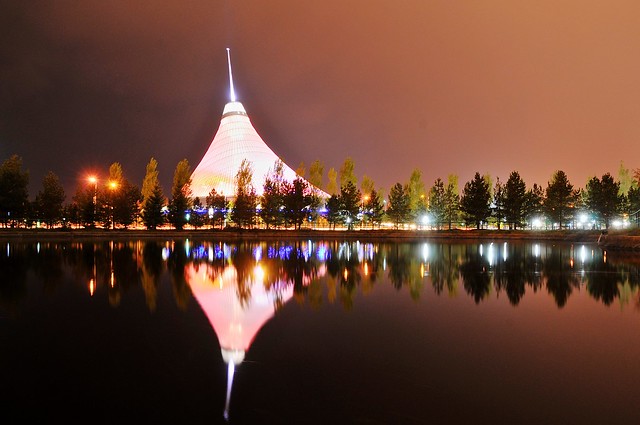
Incidentally, shooting in jpeg was a huge mistake (which I should have known, if only I had done some serious testing before leaving). I had always shot RAW before, but I had relied on bromides about jpegs from modern cameras being good enough for just about anything. For whatever reason, the jpegs produced by my D300 are atrocious. I mean, I'm not just talking about banding problems, but about severe and rather incomprehensible haloing as a result of its image processing engine. It's almost like the clumsy masking that you can see in some HDR photos. If you're wondering what I mean by this, look at the picture of Khan Shatyr, below.

_DSC0390

Look at the edge of the illuminated tent, and notice how the area around the tent is artificially dark, and how it suddenly turns lighter a fixed distance from the tent, as though the tent has a dark halo. This is with minimal adjustment to brightness and contrast, and with more manipulation (to brighten the sky, for example) the effect will only become more evident. This horrific and inexcusable effect more typically appears in pictures where a darker object like a tree is pictures against a bright blue sky, where the sky immediately around the object is artificially light. Do any manipulation and the haloing becomes quite obvious. I only discovered this when I returned home and started to do some serious work on my pictures, by which time is was too late.

Anyway, since I was running out of space I already knew I would need either some new CF storage cards for my camera, or a portable hard drive to move files to. Given the difficulty in finding the less common CF cards, as well as the heightened expense that such a specialty product would have in smaller markets (SD and micro-SD cards were much more common, given their use in mobile phones as well as car stereos in the CIS), a portable hard drive seemed like the most likely option. But after I lost my phone, I gave serious consideration to a netbook. Thankfully I was in Kazakhstan when this happened, which meant there were real computer stores with reasonable prices: everything in Bishkek was at least 50% more than you would pay in the US (and if someone had decided to import things like Google Nexus or Kindle Fire tablets they could make a killing there). I found a refurbished ASUS netbook without an OS for 32,000 tenge, which was a reasonable price even by the low, low standards of US pricing, and decided to buy it. It wasn't that difficult decision, given that a portable hard drive would have cost at least 10,000 tenge, and likely more.

The decision to buy was only slightly complicated by a Canadian guy at the Apple Hostel who was interested in selling his Nexus 7 tablet, something which had only been released after I started traveling. He was happy with his Nexus phone, but I ultimately decided against it since it didn't have nearly enough storage and I would need to buy a hard drive as well.

This Canadian guy was really, shall we say, interesting. He was in his late 40s, and was Armenian-Canadian. He spoke Russian fluently, and was taking a year off to travel mainly in China, where—in his experience—foreigners are treated like kings. When I disagreed with that assesment, he said that maybe it was only white foreigners who were treated that way (although he was slightly swarthy, he strongly resembled Ron Jeremy, and said that his copious arm and body hair fascinated the Chinese). I think he's really the one who reminded me that I'm not white and that I do get treated differently than white Westerners, but some fair-haired Europeans at the hostel also disagreed about white people being treated like royalty, so I suspect that things have changed considerably since the last time the Canadian had been in China.

Anyway, he was spinning his wheels in Almaty because he had somehow managed to lose both his passports and all his travelers cheques (who carries these, anyway? ATMs give you just as good, or better, rates) on the streets of Almaty. Am-Ex was refusing to reimburse him because they found his account of his loss suspicious, and the Canadians were unable to issue a new passport in less than either 30 or 90 days (based on my attempt to get a new passport in Washington, DC, I believe it was the latter): the best they would do was issue him an emergency travel document to allow him to return to Canada. His Georgian passport (more on that in a minute) was his lone ray of hope, as they said they would be able to issue him a new passport in under two weeks, though he would have to go to Astana to pick it up.

How, you may wonder, does an Armenian-Canadian get Georgian citizenship. Well, according to him, the President Mikheil Saakashvili was a rabid xenophile with a Dutch wife, and he had instituted a policy where any foreigner (or maybe any Westerner) who lived in Georgia for more than 3 months could apply for citizenship. So that's what this Canadian guy did, and he got his citizenship. As a former CIS member with reasonably close ties to other former-Soviet republics, carrying a Georgian passport made travel within CIS states considerably easier. It sounds preposterous, as did his claim that Saakashvili mandated that foreigners be given a free bottle of wine on arrival at the airport, but that was his story.

As a result of losing both passports and all the money he had on him, he had to make a lot of phone calls to different parts of the globe. This involves different time zones. Because this was very confusing, he decided on the basis of his confusion that everyone in the world should switch to a common time system. And since we would all be switching, anyway, why stop at the simple adoption to GMT or UTC? Why not go to a complete base-10 system, and away from 60 minutes and 24 hours? I pointed out that Swatch Internet Time, with its 1,000 beats per day, embodies exactly this idea, but for some reason had not been widely adopted. He was very insistent that the idea was superior and that change should be foisted upon us, and could not be convinced otherwise.

For someone who looked like Ron Jeremy, he had a surprisingly intense interest in younger women. Although he had been in Almaty for less than a week, he had already gone on a date with a divorced Kazakh woman he had met through an online service. As a divorced woman with a daughter, I suspect her prospects in Kazakhstan were limited, and perhaps someone with a Canadian passport sound appealing. That's the only thing I could figure. He was also very enamored of this Georgian girl who had once interviewed him about how he obtained Georgian citizenship, saying she dressed like a hooker in her Facebook pictures, and was eager to show them to a Dutch guy who was going to Georgia. She was in her mid-twenties, and the Canadian said she was almost too young for him. The Dutch guy then asked him who he would consider to be too young for him, a question to which we never got a real answer.

Despite his quirks, he could be an interesting guy to talk to, as he speaks Russian fluently and Russian is what everyone in Kazakhstan speaks. Unlike in Kyrgyzstan, where Uzbeks will speak Uzbek to other Uzbeks, and Kyrgyz will speak Kyrgyz to other Kyrgyz (although the language are both Turkic, as are Kazakh, Uyghur, and Turkmen, there are enough differences to make them only as mutually intelligible as Italian and Portuguese, for example), Kazakhs will speak Russian even when amongst other Kazakhs. To a large extent this is because many Kazakhs speak no Kazakh, and even more are not fluent in it. Indeed, it is remarkable to hear Kazakhs actually speaking Kazakh in public.

The Canadian's view on this was kind of surprising, because he thought Kazakhs should use their local language more. The reason this was surprising was because he also thought that there should be no sympathy for people like the Georgians who insisted on using a backwater language with a unique writing system that effectively limited their economic opportunities as compared to if they all spoke Russian or another major language. In his mind, economic progress was really the only thing that mattered, which is why he was also effectively on the side of the Han in dismissing the complaints of the Uyghur and Tibetans in China. On the other hand, he was also critical of Japan, which hasn't apologized for war-time and colonial atrocities in Nanjing and elsewhere, and where the Prime Ministers continue to visit Yasukuni shrine, where multiple convicted war criminals are interred. I pointed out that this kind of anti-Japanese antagonism only makes sense from a moral perspective, and not from an economic one, and that if we were adopting a moral perspective then the Han treatment of Tibetans and Uyghur were equally problematic.

He eventually got really mad at me and told me to stop talking to him when I pushed back against his time-zone idea and suggested that it would introduce a lot more problems than it solved. I think everyone else in the hostel (and life) was content to simply tolerate his views as the source of amusement, especially since he had some difficulty understand when people were taking the piss out of him. At one point he touched the screen of someone's laptop, then apologized for doing so. I said that he probably didn't like it when people touched his screen, and he said that when people at work did that to his computer, he would briefly excuse himself and walk to the bathroom, return with a mess of wet paper towels, scrub and dry his screen, then turn back to screen-toucher and ask them to continue their thoughts. He said this usually prevented them from doing it again. I suspect it prevented them from ever visiting him again.

But it was nice to go out with him and have him be able to translate things or decipher menus or ask what things in cafes were.

_DSC0452
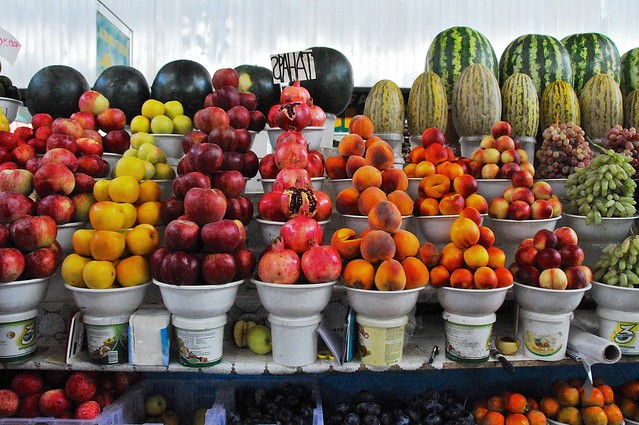
The Green Market in Almaty is a nice mix of an organized Central Asian market and Western hygiene, especially in the central fresh-market area. The surrounding areas are just seedy enough to feel exotic and "authentic."

Almaty is a very chic place. There are top-notch international stores and brands, and in many ways it feels like what I imagine certain Baltic states must feel like: very European and modern, but with unmistakeable traces of Soviet influence, or that it had been a little down on its luck not so long ago. The edges are roughest around the Green Market, but they never really get that rough.

Part of that is because of the people, who are really very young and stylish. The German girl I met in Xiahe said the women were really attractive (something I also heard from others), and it's true: they are. I'm not sure many of them are actually any different than Mongolians or Kyrgyz so far as fundamental appearance goes, but it's just that they dress like Russians, put as much money and effort into their appearance as Russians, and have very Western style sensibilities combined with the resources to implement those sensibilities. What does make some Kazakh women unique, however, is that the large numbers of Russians in the country have resulted in some Kazakh women being of mixed heritage, and many of these women (and men) can be incredibly stunning (and perhaps the only people from whom the word "Eurasian" actually makes any sense). Sometimes Russian blood manifests itself in light, sandy hair, which is sometimes explained as them being "real" Kazakhs, on the theory that many in Chinggis Khan's army had fair hair. Other times it's visible in a mixture of Asian and European facial features, or green eyes. Sometimes the effect can seem a little awkward, in a captivating sort of way, while sometimes it is simply stunning. People of mixed ethnicity are relatively rare, however, and it is even more rare to see someone who appears to be the direct result of inter-ethnic parents.

_DSC0457
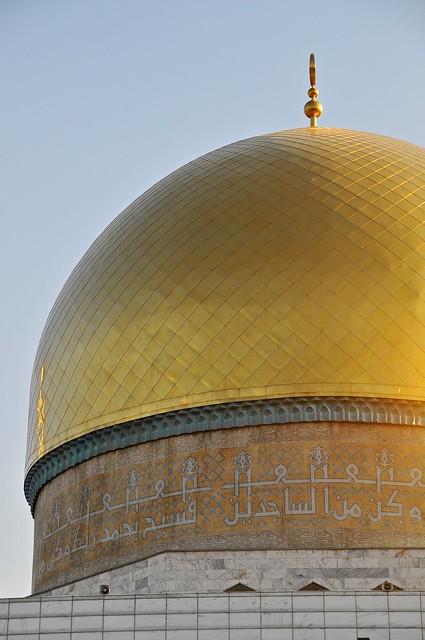
The dome of Almaty's Central Mosque, finished in 1999.

_DSC0459
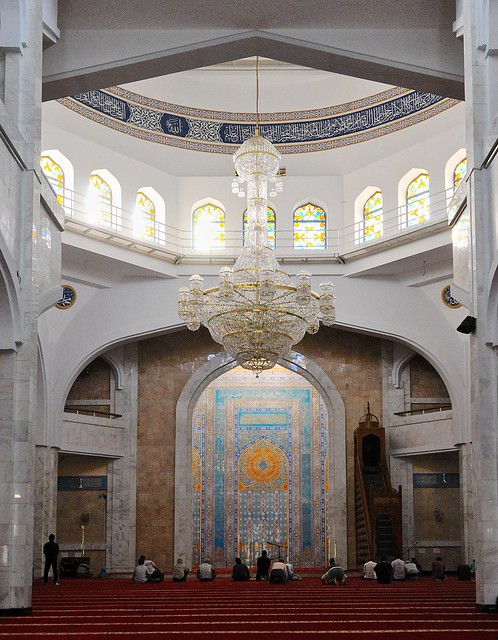
Interior of the mosque.

Monday, 17 September 2012

Astana: the weird, wacky, and wonderful architecture of Kazakhstan's showcase capital in the middle of nowhere

Astana isn't actually the last stop on the train from Almaty, but it's where almost everyone gets off. Because there really weren't any decent options available in Astana at the time (though the folks behind the Apple Hostel in Almaty, overwhelmed by the popularity of their hostel, have opened a branch in Astana), I decided to stay at the Station Hotel, which offered dorm accommodation for 2,500 tenge per night. The ladies working at the hotel were actually pretty friendly, which is always a bit of a surprise at an institutional hotel with Soviet roots.

Although the train station is some distance from the new city and its architectural attractions, it's still pretty convenient since buses run south along the main street to Khan Shatyr pretty frequently, and it's dead easy to get off the train and check in. Unfortunately, because most guests are taking the train, it means you have people checking in and checking out at all hours of the day or night—whenever a train arrives or leaves. And because of this constant churn, the staff changes the linens as soon as someone checks out, which means you will have noise at random times when you're trying to sleep. As with many other Soviet-style hotels, you need to pay extra to get a key to the shower: 3,000 tenge.

I took a quick nap after arriving and walked south towards the new city. Around the station the city is kind of a dreary Russian-looking city: a little bleak, not a lot of trees, large and characterless blocks of buildings (although the ground floors were typically occupied by modern shops and restaurants).

Although it was only mid-September, the change in climate was immediately noticeable, as Astana was much colder and windier than Almaty, and the vegetation nowhere near as lush or varied. In many ways, Astana felt like Calgary: dry, cool, and relatively inhospitable to most trees.

The further south you get, the more modern the buildings look, and when you cross the river and arrive on the left bank you truly arrive in the world of weird architecture in a planned city.


Almaty's building boom started when Astana was named the capital, in 1997. Although Almaty is a gorgeous city and one of the gems of Central Asia, it's also on the southern edge of Kazakhstan, next to Kyrgyzstan and quite close to China. The move to Astana, some 1,200 km closer to Moscow,  emphasizes the importance and primacy of Kazakhstan's relationship with Russia, while also creating an indisputable Kazakh presence in the ethnically-Russian north and providing the platform for the creation of a showcase city to announce Kazakhstan's bold ambition and new-found prosperity.

Most of the interesting new buildings are south of the Ishim river, which has been artificially widened as it runs through Astana. This southern area is romantically called the left bank, but it's no Paris. Almost all of the buildings are arranged along an axis known as Nurzhol Boulevard, which runs from the Khan Shatyr shopping center in the west to the Presidential Palace along the Ishim river in the east, and then continuing along the same axis on the other side of the river with a number of additional monuments. From one end of the other it's about 5 km in length, and long-term plans call for this axis of monuments to be extended considerably.

_DSC0183
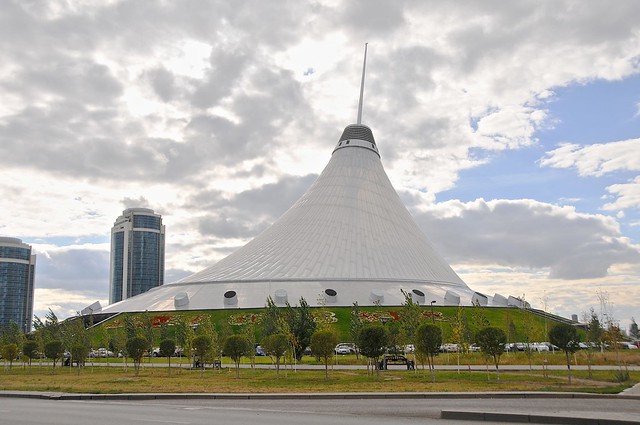
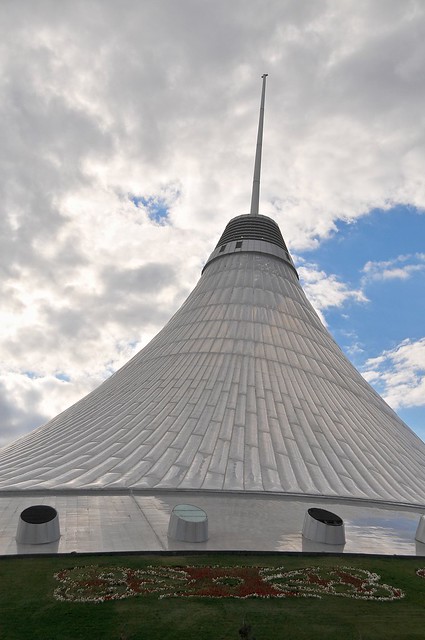
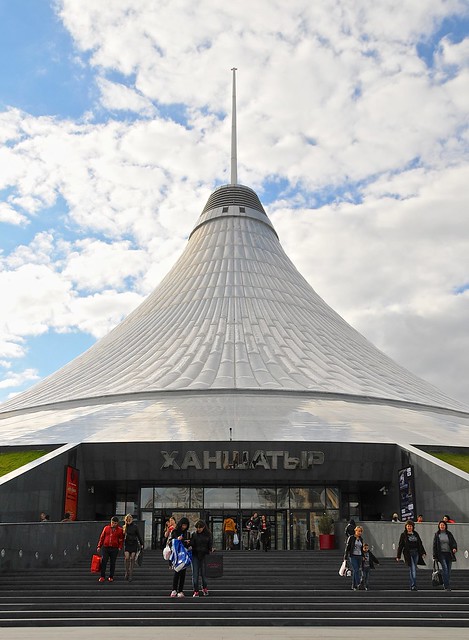
The exterior of Sir Norman Foster's Khan Shatyr shopping center. Security is pretty tight, and you have to go through metal detectors and security scrutiny as you enter. The building apparently cost $400,000,000 to build.

_DSC0184
Traditional design in flowers.

_DSC0190
The main entrance.

_DSC0191
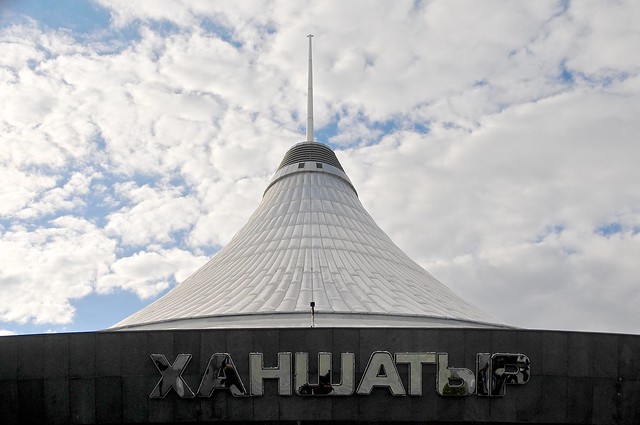
KHAN SHATYR!!!! For someone used to more differentiation between upper and lower case, Cyrillic can look monotonous and shouty.

_DSC0193
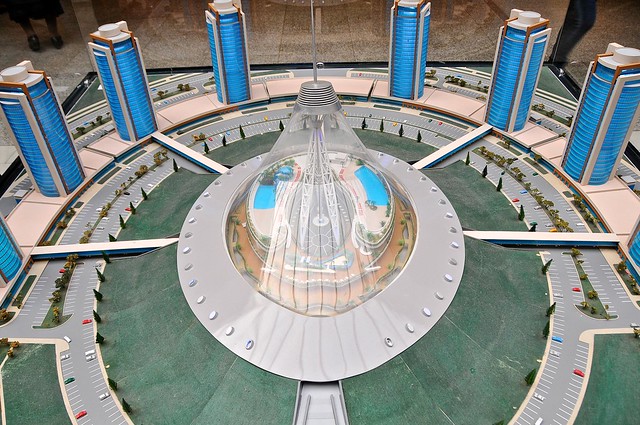
A model of the central building with the networked apartment buildings that will surround it. You can see the pools and beaches on the top floors of the model.

_DSC0195
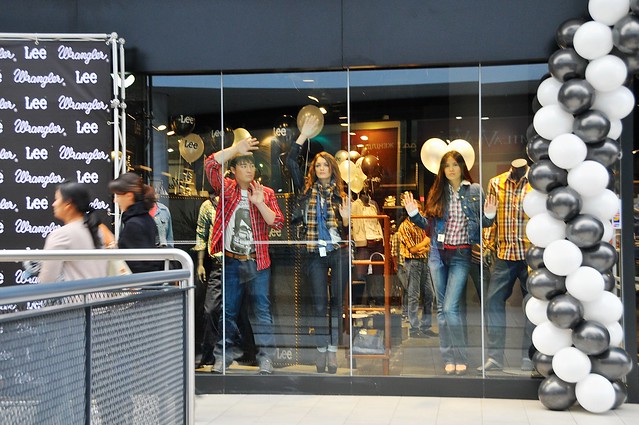
Speaking of models, they had models as live mannequins at this Wrangler store. They would take a pose for 30 seconds or so, then move around and take up new poses. This picture kind of sucks because I tried to take it surreptitiously, since it seemed weird to take pictures of them, even if they were models.

Friday, 14 September 2012

Leafy, European Almaty


Marshrutkas run pretty regularly between Bishkek and Almaty, leaving Bishkek from the Western Bus Terminal. I was accompanied by a couple of German guys who had flown into Bishkek and wee looking at spending a week in the city—more time than they wanted. Although they had a now-unnecessary visa for Kyrgyzstan, they lacked one for Kazakhstan. I had read online that it was possible to enter Kazakhstan as far as Almaty under some sort of reciprocal program, so long as you had a Kyrgyz visa, so they were trying their luck at that. At the border, however, there was a long delay in processing them, so the rest of the Marshrutka passengers and I had to wait for an hour on the other side of the border while they were processed. It's a good thing that time isn't of much value in Central Asia.

When they were finally processed and allowed to enter into Kazakhstan, I found out what had happened: although the law did allow them to enter, it only allowed this if they had a double-entry Kyrgyz visa. Of course, since entry to Kyrgyzstan was now double free, this restriction didn't make much sense, so once the Kazakh officers told them that they were returned to the Kyrgyz side where the officers simply changed their visas to double-entry. That being done, they were allowed to enter Kazakhstan, on the understanding they would only visit Almaty.

_DSC0108
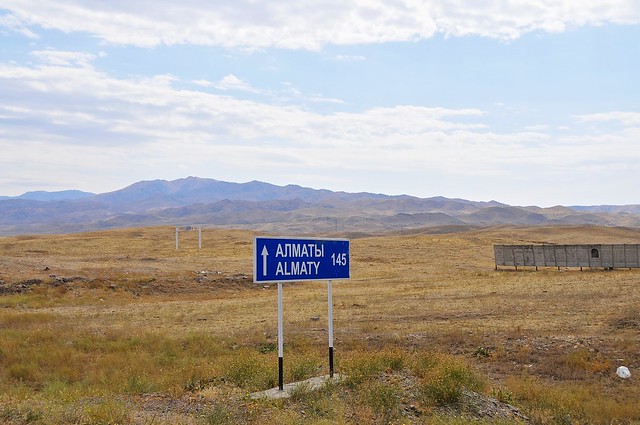
On the road to Almaty. Most of the mountains in Kazakhstan are along the southern borders with Kyrgyzstan, Uzbekistan, and China.

_DSC0109
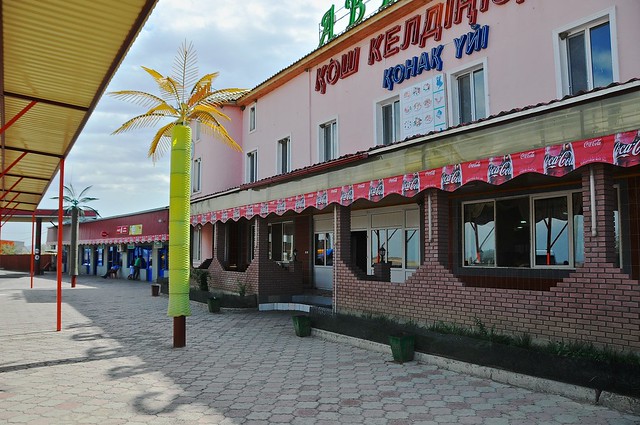
We made a brief stop at this interestingly-decorated restaurant and convenience store. I probably should have bought something here or when I was waiting at the border, just to spend some som and get tenge in change, so I would have some money for bus or taxi fare to get to the hostel.

As you enter Almaty, it becomes clear that there are real differences between Kazakhstan and Kyrgyzstan: the highway is wide and smooth, there are large and modern shopping malls with 3D movie theaters, the cars are new and undamaged, and things look like they could be from a developed nation.

The Sairan Bus Terminal, where the Marshrutka dropped us off, is well west of the center, and we didn't really have any idea how far away we were. We ended up walking to the Apple Hostel, passing a surprising number of shopping malls along the way. Thankfully, we had been given very specific instructions on how to find the hostel, as it was totally unmarked and in a complex of three apartment buildings, each of which had six separate entrances leading to unconnected stairwells (so you had to get the right entrance), each of which could only be entered by buzzing an apartment. If you didn't know exactly where to go, you'd be lost.

The appropriately named Apple Hostel—Alma means Apple, and it was known in Russian as Alma Ata, or father of the apple, as this area is regarded as the birthplace of the apple—is basically just an apartment that a couple decided to turn into a hostel. They had their own bedroom—and a cute baby—but the other rooms were converted into dorms and smaller bedrooms. They have a full kitchen, a couple of bathrooms with showers, another without, a laundry machine free for guests to use, free and fast wi-fi (fast internet is very rare in Central Asia), and a couple of laptops you could use. Only the wife spoke English, but she was really helpful and interesting (unfortunately the girl who was there during the daytime didn't speak English) and the guests who stayed there tended to be interesting to talk to, too.

_DSC0110
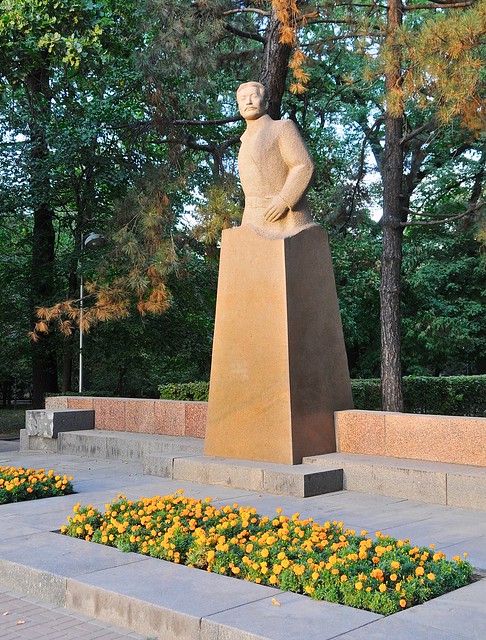
He looks a bit like a Kazakh Stalin.

_DSC0111
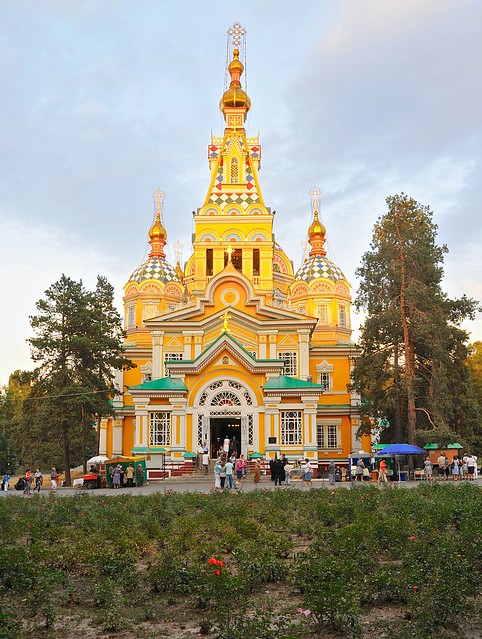
Almaty's colourful Russian Orthodox Zenkov (Ascension) Cathedral is made completely from wood, with no nails whatsoever.

On my first full day in Almaty I had a few clear objectives: to buy a train ticket to Astana; to register with the OVIR immigration office; and to visit the Almaty offices of STANtours to pay for my Uzbek letter of invitation (because of the steep bank-wire fees for transfers from North American banks to STANtours's bank, I saved myself almost $50 by making the payment in person—I later learned that Xoom.com is a pretty cheap way to make transfers from North America.)

The STANtours office is a bit out of the way, but I was able to meet both Katya and David, both of whom are as helpful and nice in person as they are by email. It was a good chance to see what less-touristed parts of the city looked like... and actually it was pretty nice. Apple Hostel is already on the outskirts of the areas tourists are likely to go, just north of the Theater metro station, and as I walked southwest to STANtours I was impressed with the city. Confirming most of what I had seen the evening before, the quiet streets were lined with trees, and there were small shops and markets all over the place. It kind of felt like a peaceful Austrian city, but with a definite Russian flavour.

There was a large shopping mall not far from STANtours, and since I was in need of a second pair pants after my encounter with barbed wire in Ulaanbaatar, I decided to stop by. I had tried to find some between UB and here, but shops with western brands disappeared after Xian, and clothes made for the Chinese market don't fit me very well. In Kazakhstan you have lots of western brands, from  Russian-oriented brands to European ones like Zara and Marks & Spencer, to American juggernauts like The Gap. Although there's rarely a day in the US where The Gap isn't on sale, pretty much everything in Kazakhstan was full priced and I didn't relish paying that much. It was still interesting to see places like Burger King in high-end boutiques in Kazakhstan, and to see how much nicer these stores tend to be in places where they are considered relatively high-end stores.

I then headed to the other end of the city, where it was pretty easy to make a train booking for the 20-hour train to Astana leaving the next day. There are a number of trains each day, and I took one that leaved just after 1:00 in the afternoon and arrived in Astana the next morning at a little after 9:00 am.

_DSC0115
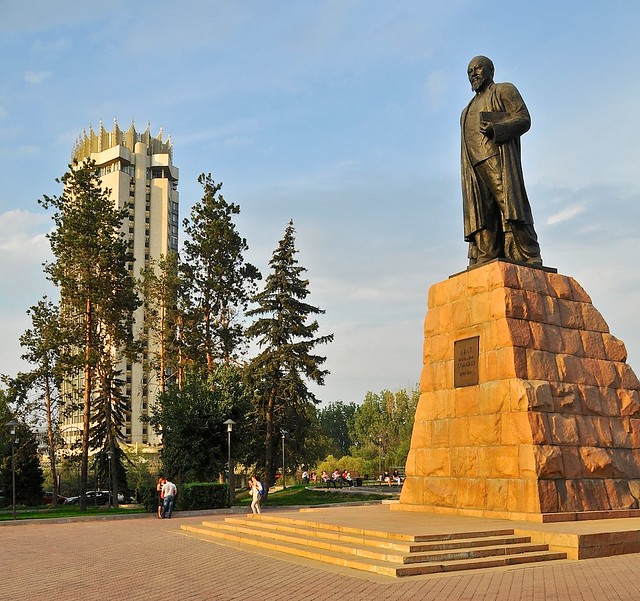
Statue to Kazakh poet Abai Qunanbaiuli, with the well-kept Kazakhstan Hotel. Most Soviet-era buildings in Central Asia look their age, and are little more than peeling, crumbling shells of what they once might have been. Only in prosperous Almaty have these buildings, from the monumental to the pedestrian, been well maintained.

_DSC0116
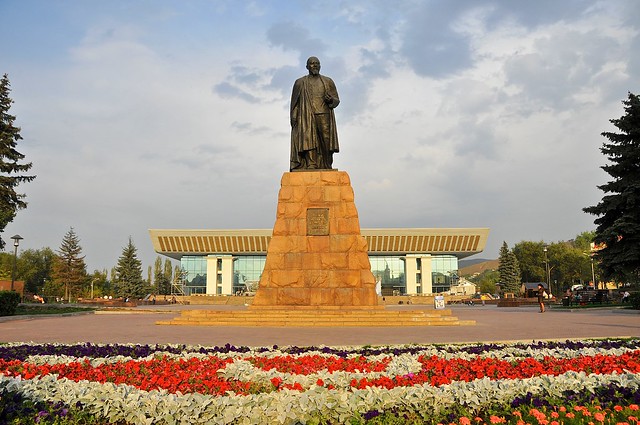
The Palace of the Republic lies behind the statue. The cable-car station for the ride up to Kok Tobe is off to the right.

Friday, 17 August 2012

Unwinding in Dunhuang & Mogao

From Jiayuguan to Charley Johng's Dune Guesthouse

Standing-room tickets—which let you get on the train but don't assure you of a seat—are never fun, and are probably least fun when on a train leaving at three in the morning.

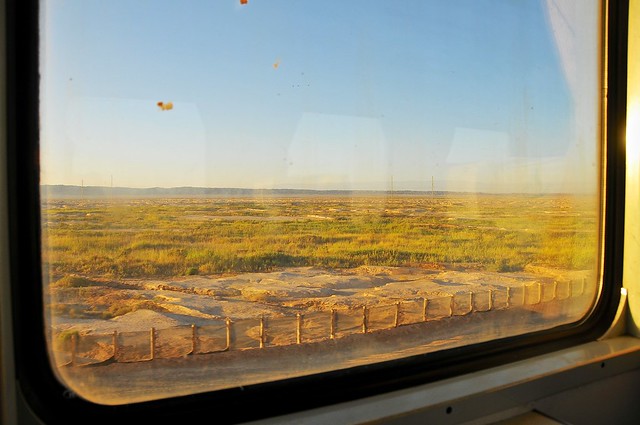
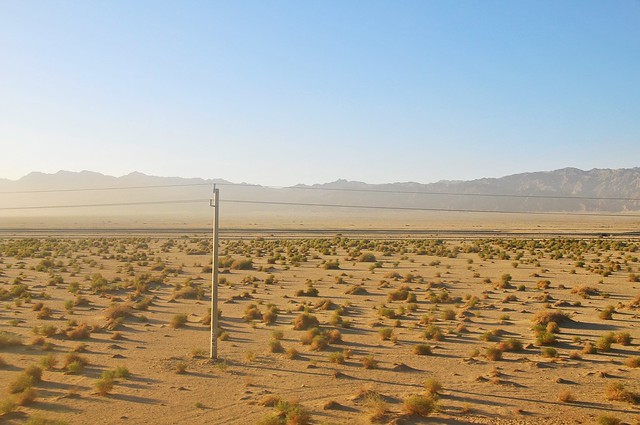
I was lucky enough to find a seat, but the car was full of people trying desperately to sleep on uncomfortable hard seats arranged facing each other, with garbage and spilled drinks littering the tables and floor. I managed to get a couple hours sleep, and when I awoke was able to enjoy the rising sun over the desert.

_DSC7701
Early morning on the night train.

_DSC7702
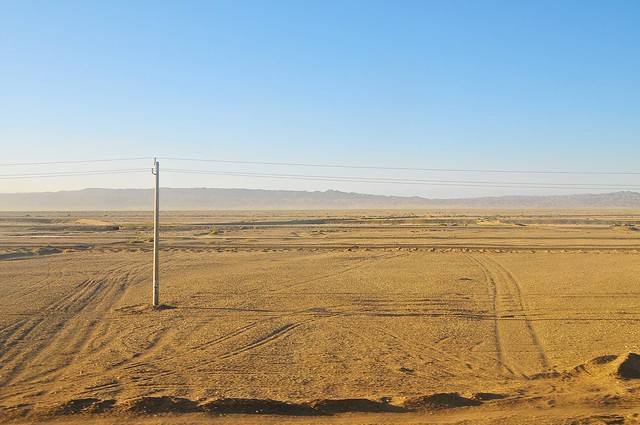
This is still part of the Gobi, just like it was way back in Shainsand, Mongolia.

_DSC7703
It makes you wonder what else you miss by traveling at night.

The train station in Dunhuang is some way east of the town, and when the train arrives there is a big rush and excited taxi drivers and touts. You can ignore them, as you can take a bus into town for about 5 yuan. Any of the green minibuses in front of the station will be going into town.

I decided to stay at one of the hostels by the sand dunes, and at the time Charley Johng's was the only one of the dune hostels listed in Lonely Planet. I went to the cafe of the same name in town to ask about both this dune guesthouse and his hostel in town, but the lady there said only the dune hostel had room. It turned out that this was basically a lie, and that in reality the hostel in town had been sold and was under different ownership, so all guests were directed to the dune hostel. You can take a green minibus to the dunes for about 3 yuan.

_DSC7705
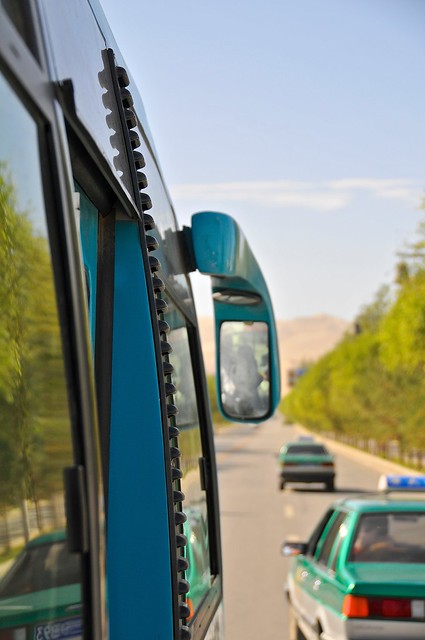
On the bus to the sand dunes.

_DSC7708
You take a few turns off the main road to get to Charley Johng's, but there are signs along the way.

_DSC7709
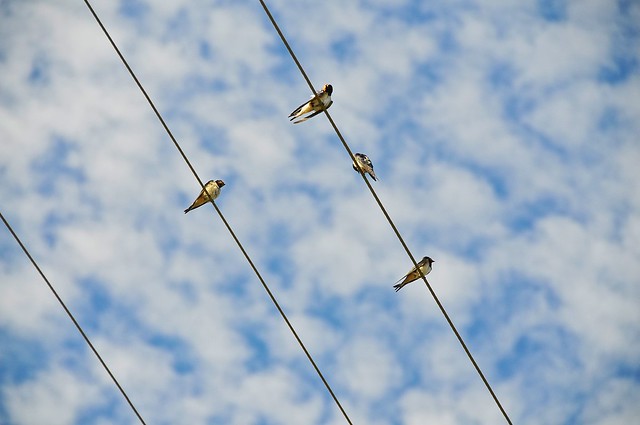
Birds on a wire.

_DSC7715
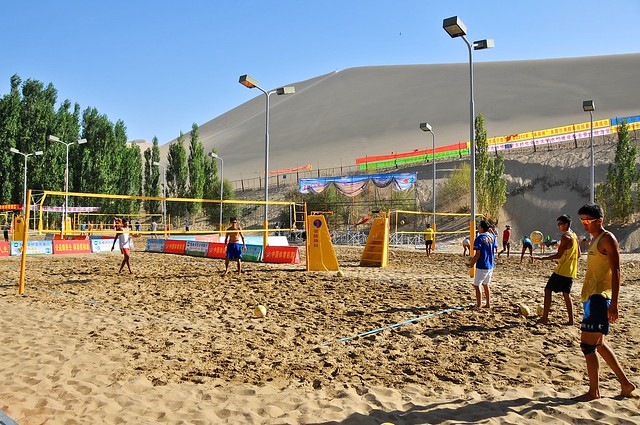
There's a volleyball court right next to the guesthouse.

The main thing going for Charley Johng's is the location. Other than that, it's not the greatest. The toilets are smelly and fly-infested, and the toilet-paper baskets are usually full and smelly. There are flies in the common areas, and not much hot water for showering. I was pretty unimpressed, but the location makes it convenient for seeing the dunes (especially if you're going to sneak into the park to see the sunrise)—if inconvenient for seeing the town.

Monday, 13 August 2012

Jiayuguan and the western end of the Great Wall

Xiahe to Lanzhou to Jiayuguan

There aren't any direct buses from Langmusi to Lanzhou, so you have to transfer in Hezuo. Some reports suggest that there are two different stations in Hezuo and that you might have to take a taxi between them, but I was able to transfer at the same station.

Arriving in Lanzhou, I thought I would probably have to transfer stations in order to get a train to Jiayuguan, but one of the drivers in the bus-station courtyard, before I could even make it into the station, said they could take me there. They weren't leaving for a few hours, and it was a night bus, so I left my bag with them and went out to explore the city for a few hours.

Lanzhou didn't make a huge impression on me. I saw an interesting mosque, but like most Chinese cities it seemed to be a temple to capitalism, with modern shopping malls quickly replacing anything that might have looked traditional. And although Lanzhou supposedly has the most polluted air in China, the air there was a lot clearer on both the times I was there than it was when I was in Beijing.

Although I returned about a half hour before the bus was scheduled to leave, apparently I was later than they wanted; when they saw me coming the rushed me onto the bus and we quickly left. This was my first sleeper bus. These buses have three rows of bunks, but you can't lie flat on them, as they have an inclined back and head area, with your feet going into a compartment below the head of the person in front of you. Although they're actually pretty good for sleeping, by the same token they're definitely not designed for people more than 6 feet/180 cm tall.

Typical sleeper bus configuration.

We arrived in Jiayuguan before dawn, which is to say sometime before 6:30 am, and since the bus didn't terminate in Jiayuguan we were dumped on the edge of town where the highway passed by. A taxi delivered us to the center early in the morning, and I wandered around looking for a place to stay. Like Lanzhou, however, nowhere would accept foreigners except for those that charged more than 160 yuan per night. That's too rich for my blood, so I decided to stay the day and take a train that night to Dunhuang. It's both frustrating and unsurprising that China appears not to want many foreigners to see the west of the country, with their crackdowns especially affecting budget tourists who are more likely to interact with locals and less likely to be taking tours.

In order to figure out what I was going to do I again had to rely on a friendly internet cafe to help me get online, and suss out train schedules and how to get to the station by bus. I made my way to the train station, bought the only kind of ticket they had left—standing room on a 3:00 am train—dropped my bag at the left-luggage room, and headed back into town to see if I could rent a bike at the Jiayuguan Binguan. After locating the hotel (there are multiple buildings in the same compound, so finding the right person to talk to was slightly difficult) and finding the right person, I was able to rent a bike. This was great, as biking to the sights was really a great way to see the sights and enjoy the landscape. It's too bad that more places don't rent bicycles in China, as it's a great way to explore and I used to rent bikes in SE Asia all the time. Step up your game, China! Oh wait, I forgot that they don't care about foreigners and no self-respecting, loaded Chinese tourist would ride a bicycle anywhere.


Fort Jiayuguan

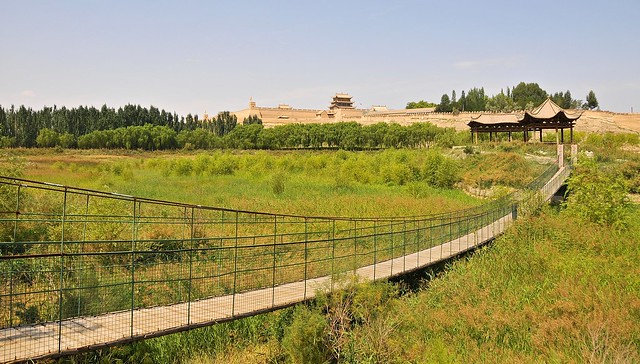
Fort Jiayuguan basically marked the farthest western extent of Ming China, strategically located at the narrowest point of the Hexi Corridor, and it's where the Great Wall ended. There are some pretty amazing pictures out there of the fort with snowy mountains in the background, and it's a pretty impressive sight at any time of the year.

_DSC7298
There's a park and pond just southeast of the fort. It's surprisingly unkempt for a Chinese park.

_DSC7303
As in Dunhuang, tourists can get rides in ultralight gliders to fly over the fort.

_DSC7309
Poppies at the base of the wall, from the south.

Jiayuguan Fort is surrounded by an outer wall and an inner wall. The outer wall, which you can see above, is fairly small, but encloses a much larger space than the inner wall. The inner wall is much more massive and encloses a much smaller area.

The inner wall and fort is the small box on the left. The outer wall encloses it, and then all of the green area is the modern park surrounding it, which includes a museum.

_DSC7315
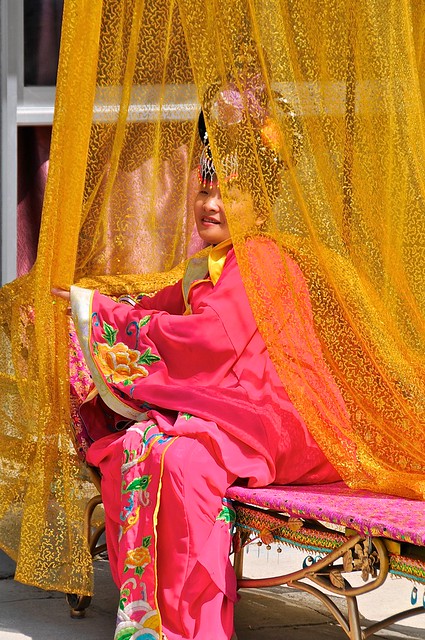
Tourists can play dress-up inside the inner wall.


_DSC7317
Looking north over the fort and inner wall, which is much more substantial. The restored stretches of the Great Wall are in the mountains back there.

Wednesday, 8 August 2012

Lanzhou & Xiahe: paranoia as you leave China proper

Lanzhou: welcome to the west

I had no idea where I would go from Lanzhou: on the one hand, I thought I might want to take a trip up the Yellow River to the Buddhas and caves of Bingling Si, and/or make the sidetrip up to the town of Xiahe and the Tibetan Labrang monastery there. I thought I would figure it out in Lanzhou.

I arrived at the train station in the morning, and headed to the the Lanzhou Huar (Flower) Hostel. They weren't in any guidebooks, but I had picked up a pamphlet in Shanghai (I think), and found instructions to them. It took about an hour to get there by bus because the directions weren't the greatest, and when I arrived I was curtly told they don't accept foreigners. This was really strange, especially since they had the English-language pamphlets on their reception desk! They said it was because of government regulations, and they weren't very helpful about telling me if there were any other cheap places in Lanzhou. I asked if I could use their bathroom, and they said it would cost 10 yuan to do so! Not very impressive (especially since it seems they had lacked the necessary permit to accept foreigners since at least 2011, yet were advertising themselves to foreigners during this time); I really don't understand the inability of people in hospitality industries to be helpful when they have to turn people away.

I backtracked to the station, and looked for the cheap hotels listed in LP. No luck, as they were either closed or not accepting foreigners. I figured that since I wouldn't be able to stay in Lanzhou that Binling Si was out, and that I would head to Xiahe. Unfortunately, the bus station listed in LP had been torn down. Well, at least the LP was still right about where the train station was.

I then tried to go to an internet cafe and see if I could figure out where to catch the bus to Xiahe and how to get there. Except the government requires you to swipe your RFID-chipped ID card in order to get online, effectively shutting out foreigners from using the internet. Thankfully, the owner over-ruled the attendant and swiped me in with her own ID card, letting me go online.

I managed to find the location of the new Bus Station as well as the South Bus Station, and determined that there should be buses running to Xiahe into the afternoon. I went the the new Bus Station (a couple of blocks east on the road in front of the station), only to find that the buses to Xiahe only run from the South Bus Station. I hopped a city bus to the vicinity of the South Bus Station, then got off and wandered around until I eventually found it, and got a ticket to Xiahe in the early afternoon—about 7 hours after arriving in Lanzhou.

_DSC6628
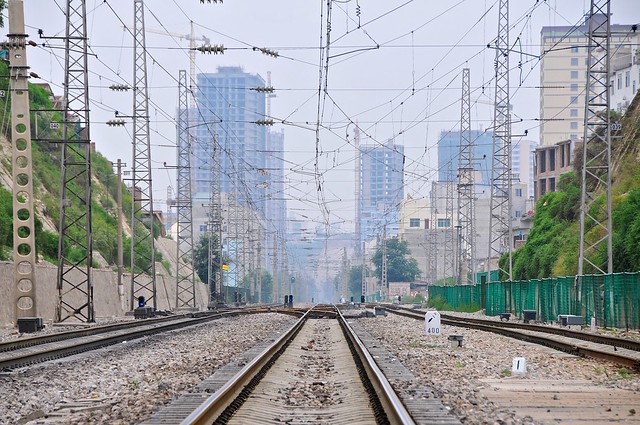
Crossing the train tracks on my way to Lanzhou's South Bus Station (which is actually well west of the main train station, and near the Lamnzhou West Train Station).

Although Lanzhou is already at an elevation of 1500 meters, the road steadily climbs to Xiahe, which is at 2900 meters. The road starts out running through dusty, dry mountains, completely devoid of vegetation except for small fields and trees planted by farmers. Then the road begins to climb in earnest, and the scenery turns decidedly green as it does. Lush fields and trees become the rule in the valleys between the increasingly-high mountains, but the biggest surprise being the abundance of new and impressive mosques that seem to pop up every few kilometers.

As we push higher and higher, the valleys narrow but the scenery remains quite green if not as lush. We stop seeing mosques, and before we know it we're pulling into Xiahe. The bus station is in the Chinese section of town, and the Tibetan quarter doesn't begin until a little further up the valley, so the introduction to the town is familiar. The closer you get to Labrang, the more Tibetan the town becomes.

As I arrived late—at around 5:00—all of the hostels were full. The Redrock Hostel said I could sleep on the floor (albeit at full price), so I ended up doing that. I thought their bathrooms—although appearing clean—were a little smelly, but it would turn out that by regional standards they were actually quite good.

Xiahe

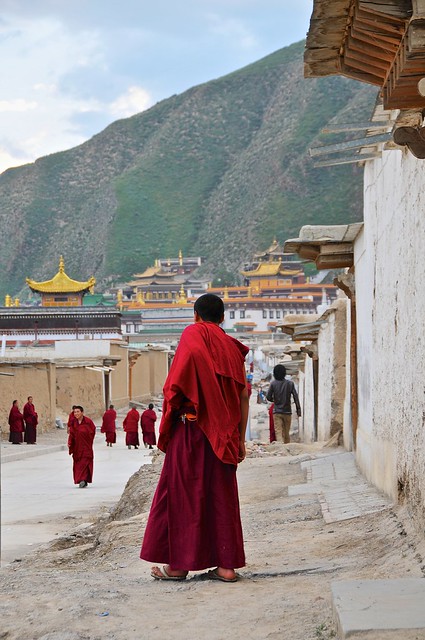
Xiahe is home to the renowned Labrang monastery, which is said to be the third-largest Tibetan Buddhist monastery in the world. It once housed 4,000 monks, and although that number has dropped to an official 1,500, some claim that there are actually about 2,000 monks studying there. Regardless, it's big and there are lots of monks, and even more pilgrims.

A kora is a circuit that the devout walk around religious site, and you typically do it in a clockwise direction. Labrang has two koras: an inner kora that simply surround the monastery itself, and is lines with prayer wheels; and an outer kora that runs along the mountain behind the monastery.

After leaving my stuff at the Redrock Hostel, I went out to explore Labrang for a couple of hours before it got dark.

_DSC6631
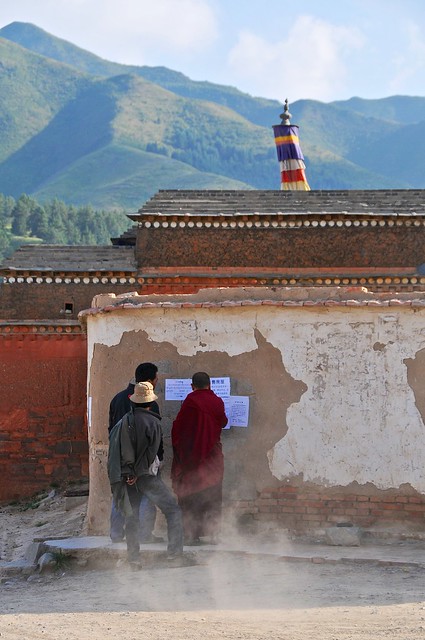
Tibetans reading notices on a dusty street at the edge of Labrang. While the Chinese section of town is all paved streets and newer buildings, the Tibetan sections are (or were) in a much greater state of disrepair.

_DSC6635
Along the main street from town to the assembly hall.

Sunday, 5 August 2012

Xian & the Terracotta Warriors

Arrival & Han Tang Hostel

I arrived in Xian and found my hostel pickup with a bit of trouble: it's a huge station and thousands of people can be counted on to arrive at any given time, so it took a couple of minutes to find the person sent to meet me. This really isn't a service you expect from a bargain hostel, anyway, but it was a surprising touch. What was even more surprising—shocking even—was that the rooms in this new hostel, the Han Tang Hostel, were about as good and thoughtfully designed as you would expect from a German or Austrian hostel: sturdy and creak-free wooden beds; individual reading lights and electrical outlets for each bunk; large lockers; separate toilet, shower, and sink cubicles in each room (and beautifully designed bathrooms); and rooms that seemed designed to hold four bunks, instead of bunks being haphazardly jammed into rooms too small for them. All this, for the bargain price of 30 yuan, which represented the high value of all the hostels I stayed at in China.

On the other hand, they try to make their money back with overpriced food and tours. The staff are overworked, and while they may try to be helpful, they really don't know much and can't offer advice other than the tours they are taught to sell (and they don't even know too much about them, as they couldn't answer some questions I had about their Three Gorges cruises). They don't know how to get to local places by local bus, and don't know where bus stations are. If you want a tour or want some food, they'll be able to help you, though. The "common area" on the ground floor functions mainly as a cafe, and not as a place for travelers to gather and relax, even though it's the only place you can get wi-fi. If you are comfortable with a hostel as primarily a place to sleep, as I am, it's a great place to base yourself, especially since there's no shortage of online information about Xian.

Xian: the eastern terminus of the Silk Road

I'm already two months into my trip now, but it's only in Xian that I'm really starting the raison d'etre of this trip: to see the Silk Road. Then, as now, Xian was really the introduction to what we popularly think of as big, bustling, populated China—China proper. West of Xian the country is drier and less populated, less prosperous, and more difficult. Mountains rise up and make travel difficult, with Gansu province's Hexi Corridor being the main conduit of travel, sandwiched as it is between the Tibetan plateau and the Gobi desert. The Hexi Corridor's western terminus ends in Xinjiang and the Taklamakan desert, where the Silk Road splits into two: the northern route goes north around the desert while the southern route goes along the southern route, below the Tibetan plateau. The northern and southern routes join up again at the western edge of the desert, in Kashgar, and then split up again to take various paths through the Central Asian mountain ranges.

Despite being the eastern terminus of the route, Xian remains decidedly Chinese in feel, with fairly scant evidence (aside from its wealth) of western influence. Although it has a noteworthy Muslim quarter, the Muslims are Hui and number only about 50,000.

Xian is where I really got tired of paying to see things. Attractions are quite expensive in China, with cheap sites being 25 yuan, mid-range being 60 yuan, and expensive attractions being 150 yuan or more. In comparison, most temples in Japan (a much more expensive country) were 500 yen, or about 30 yuan. Also keep in mind that my hostel in Xian was 30 yuan per night, and that 150 yuan was basically my daily budget for everything, including long-distance transportation.

If these are expensive for me, they're also expensive for Chinese. Or, expensive for average Chinese. For the most part, though, Chinese who can afford to travel can afford to pay a lot. When you have Chinese investors buying real estate in Manhattan, you begin to understand that if even only 1% of Chinese can afford to travel, that still makes 14 million affluent travelers. China can basically price their attractions at almost any level and still have enough domestic demand, and the somewhat perverse result is that Western prices (or more) are charged for attractions that fall to standards well below what we would expect in the West.

_DSC6391
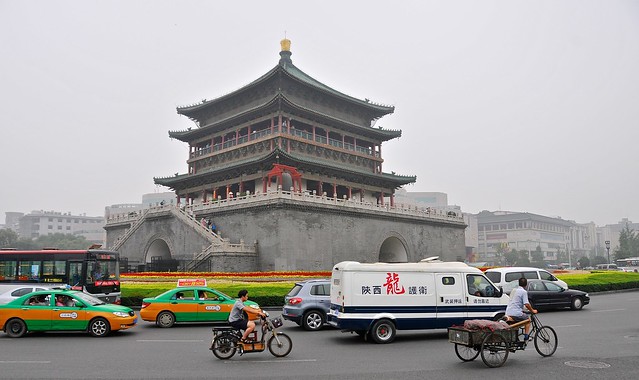
The Bell Tower is surrounded by a traffic circle and is accessed by underground tunnels. The 27 yuan entrance fee ensured I didn't go in.

_DSC6392
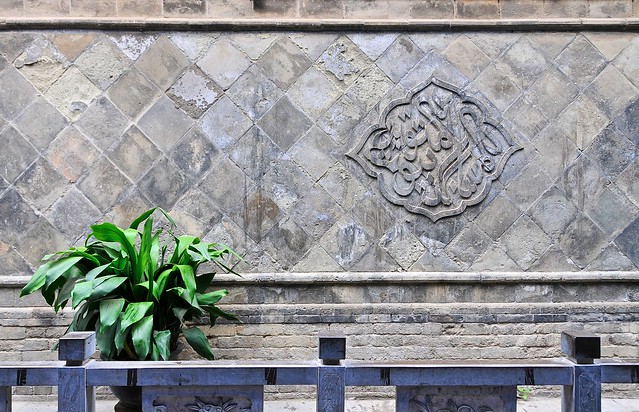
Arabic detail at the Great Mosque. Entry is 25 yuan so I skipped it, too. This is perhaps the one sight I skipped that might have been worth it, even if the Hohhot mosque was similar (but much smaller).

_DSC6397
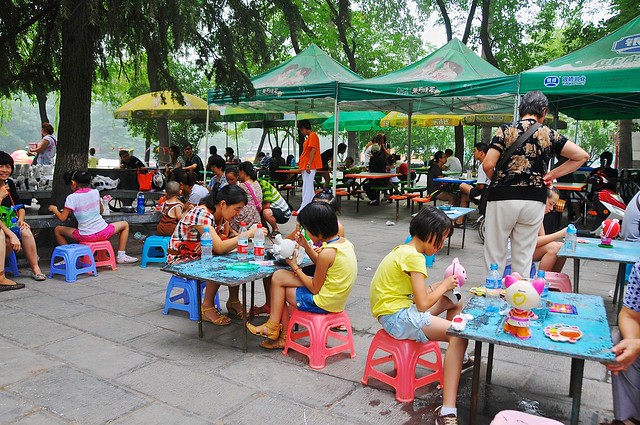
You can buy unpainted ceramics at this park and then paint them and have them fired at this park. Chinese dote on their children—not least because they can only have one—so you'll always see parents and children spending time together.

_DSC6398
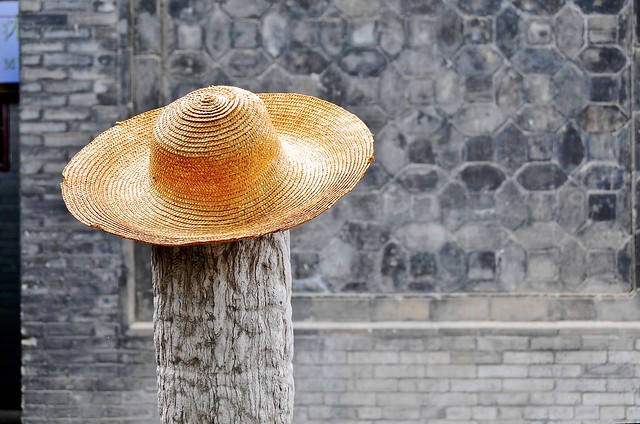
Hat on post at a mosque.

Thursday, 2 August 2012

The walled city of Pingyao

I arrived in Pingyao at around 7:00 am and walked from the station to the city. There were touts in trishaws by the station telling me they could take me to a guesthouse—including the top-rated Harmony Guest House that I was going to try and stay at—for free, but scams by transporters are legion so I declined and took the relatively short and pleasant walk.

_DSC6198
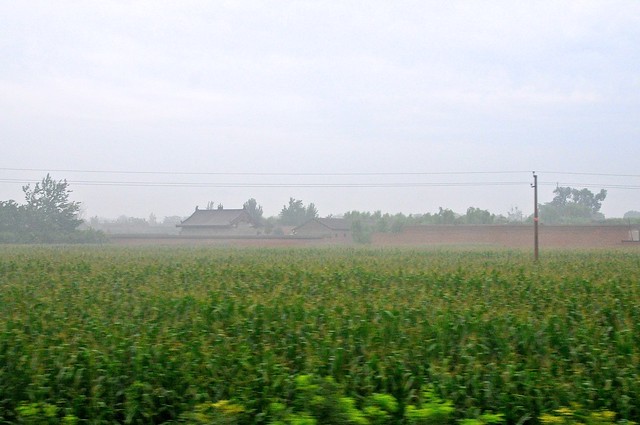
View from the train at 6:30 in the morning. Corn fields are a far cry from the Gobi.

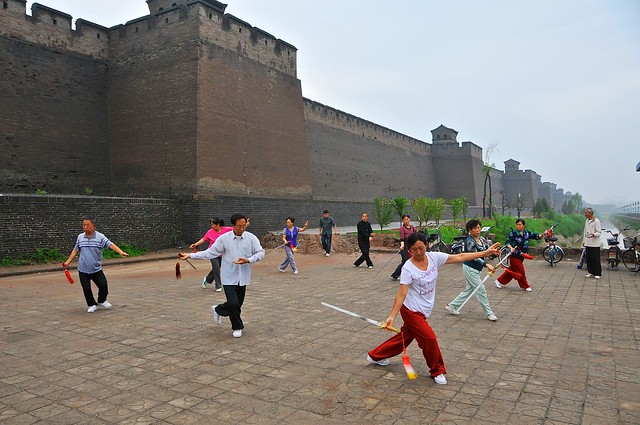
I was a little surprised that the town was just waking up and that there weren't more tourists or locals up and about, but other than some Chinese doing morning Tai Chi there wasn't a lot of action.

_DSC6211
Morning exercises by the old city walls, under the watchful eye of an old master.

I made it the Harmony and they did indeed have space, so I booked a dorm bed, left my bag in the common area, and had a shower in the shared bathroom before leaving to explore.

_DSC6217
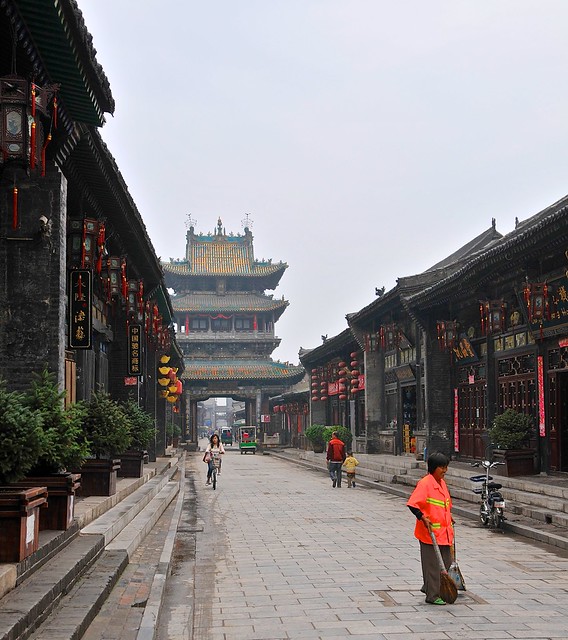
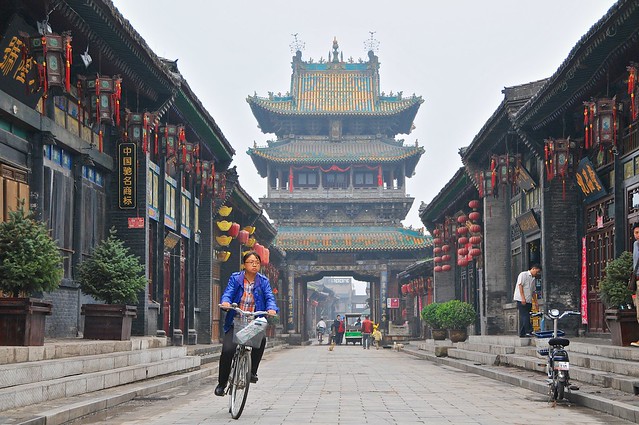
The Harmony is on this street, which isn't so bust at 8:00 in the morning.

_DSC6219
Shop doors are shuttered and the street sweepers are out.

_DSC6224
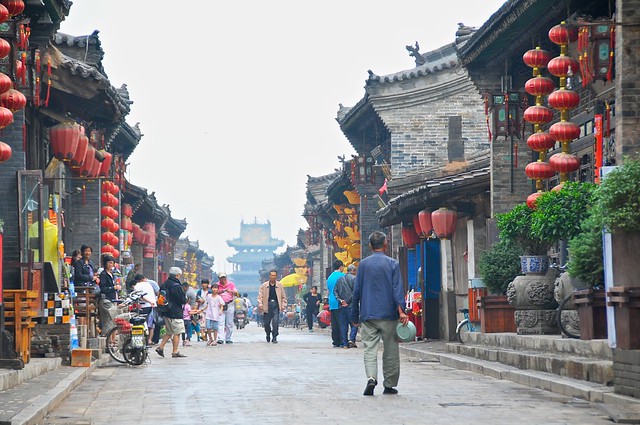
A little later and things start to pick up.

_DSC6229
The busier the main streets get, the further out to the side streets I go.

_DSC6230
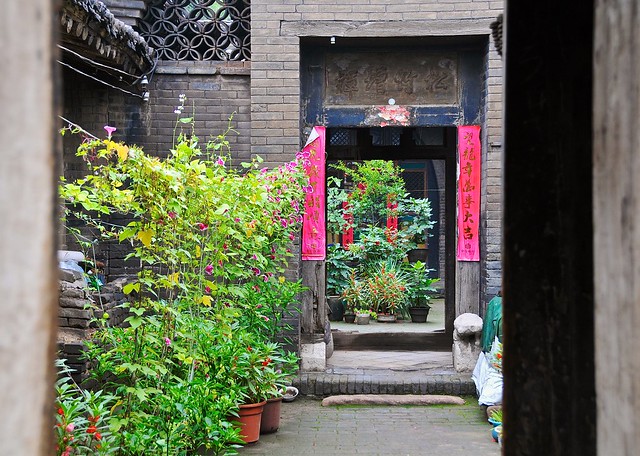
It's a wonder these old houses haven't been razed for new and expensive buildings.

_DSC6233
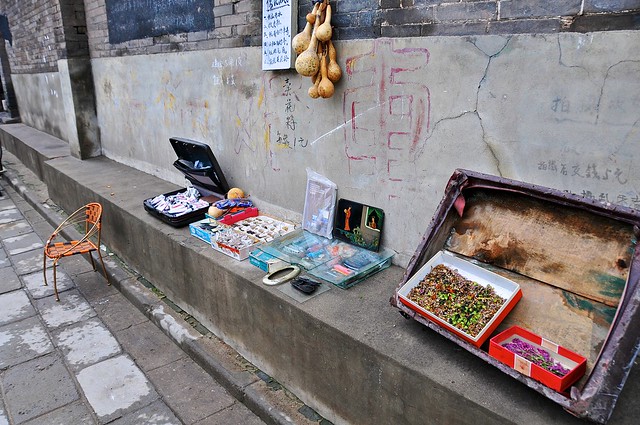
Old people sell knick-knacks in the street.

_DSC6235
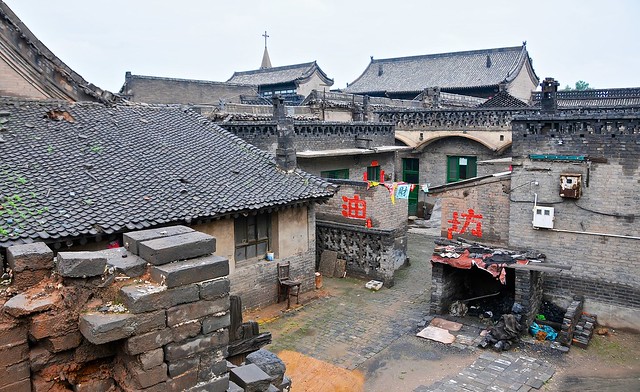
Old houses around communal courtyards, with a church spire in the background.