You can catch a marshrutka to Karakol from the Western Bus Station in Bishkek. It cost 300 som for the 6-hour drive there, following the northern shore of Issyk-Kul lake. Issyk-Kul was a popular resort area during the Soviet era, and beach resorts line the northern shores. Slightly saline, the lake doesn't freeze over in the winter, which is why its name means "hot lake" in Kyrgyz.
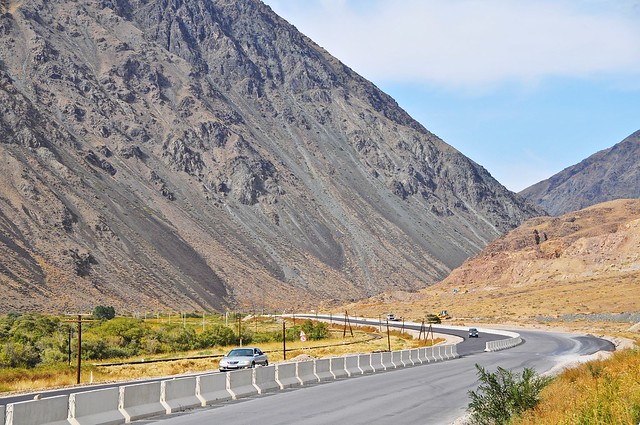 |
| It's a six-hour marshrutka ride from Bishkek to Karakol, broken up by a rest stop at a real, full-fledged restaurant in the lone pass between Bishkek and Issyk-Kul lake. |
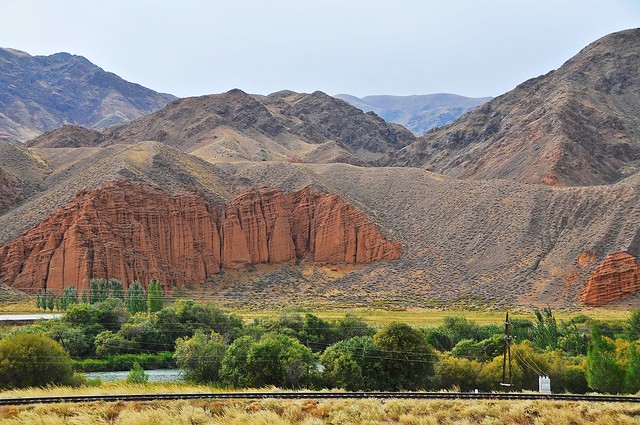 |
| View from the rest stop. |
Because the ride from Bishkek takes six hours, there's not much time to do anything once you arrive in Karakol and find a place to stay (especially since the bus stop is some distance from the center and the CBT office probably isn't open, in case you were hoping to stay at a CBT guesthouse).
I ended up staying at the Neofit hotel, which was 450 som for a single room, including breakfast. Bathrooms were shared, but they had ample hot water and good pressure. I thought it was a good value, but not the best place to stay if you want to meet other people and arrange trekking in the area.
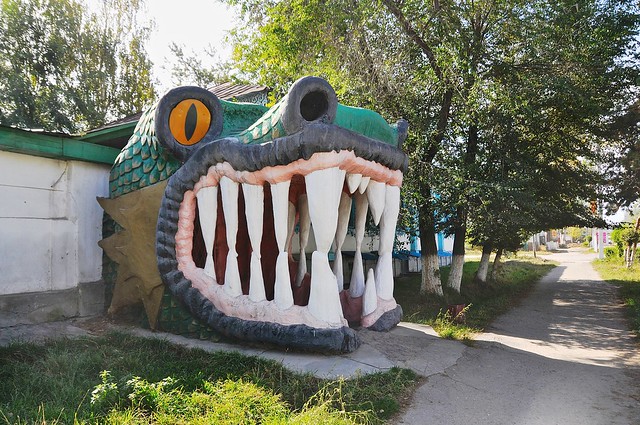 |
| The colourful entrance to the Neofit Hotel's restaurant. The hotel entrance is around the corner on the left. |
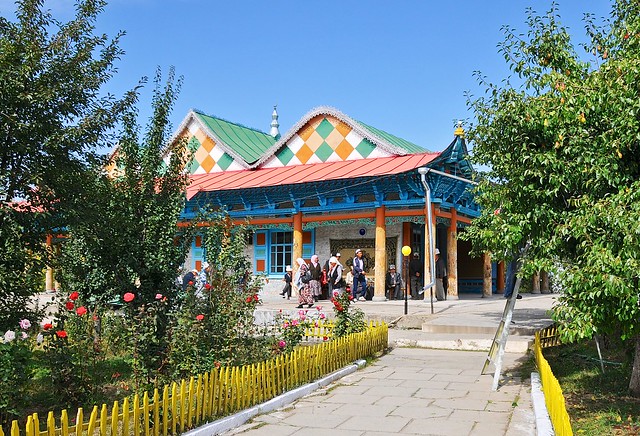 |
| Karakol's Chinese Dungan Mosque. Dungans are the local term for Han Muslims, and are basically what the Chinese would call Hui. The ladder on the right is to harvest the pears ripening on the tree. |
 |
| Most of the worshippers look more Kyrgyz than Dungan/Han to me. |
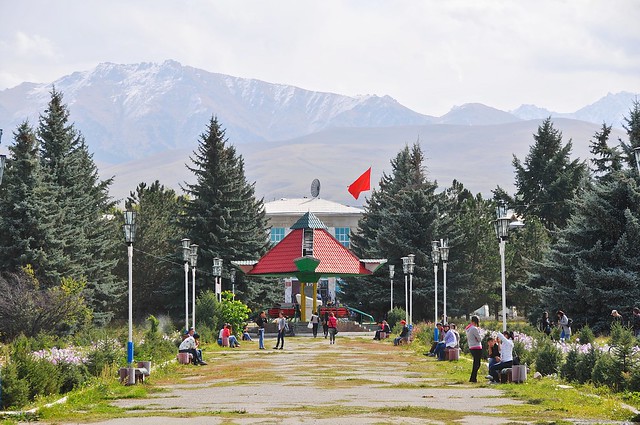 |
| Students line the park in front of the University. I quite like the unkempt look. |
