In all honesty, I have very little sense of Tashkent, which is fairly understandable since I was only there for one day. And because I knew I was only going to be there for one day, I used the subway a lot to get from place to place, even though Tashkent really isn't that large and I normally would have walked everywhere—I find that walking places gives me a much better sense of a place, it's people, and the geography.
After waking up and having a breakfast that was a little more leisurely than I like (especially since I almost never have breakfast unless it's free), I headed down to the train station but a ticket for Samarkand, and was only able to secure a first-class sleeper berth for that evening. In retrospect, it would have made more sense to buy a ticket for Bukhara, then come back to Samarkand, then take another night train from Samarkand to Khiva—trains to Khiva only pass through Samarkand, and not Bukhara.
Khast Imam
After this I headed to the premier religious complex in Tashkent, the Khast Imam complex, and it was already 1:00 by the time I arrived there—I really had only half a day in Tashkent. The central mosque contains what is claimed to be the oldest Quran in the world, written in 655. For me it was most interesting as a place to observe the obvious tension between the government and the devout—something especially curious given that the current mosque was recently constructed as a way to curry favour with the religious.
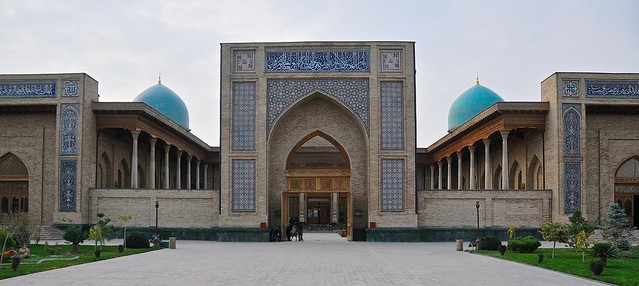 |
| The main entrance to the new Khast Imam mosque. Uzbekistan makes sure that the religiously devout know they're being kept tabs on, as there were a bunch of police cars ostentatiously parked directly behind me. |
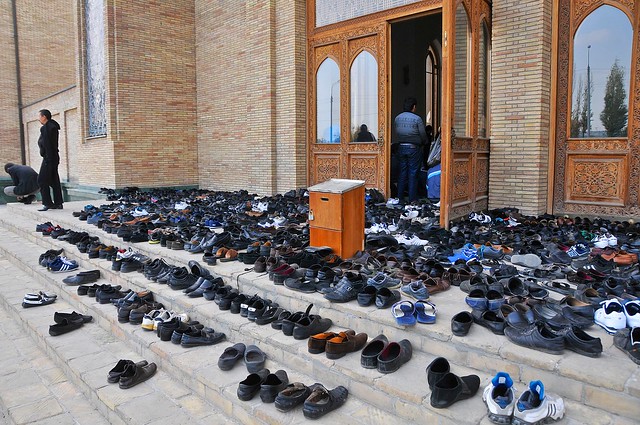 |
| Shoes galore. |
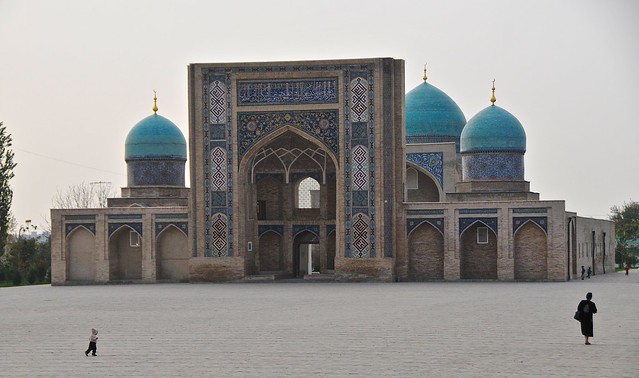 |
| Behind the mosque are s number of other religious buildings, including this, the Barak Khan madressa. Like many madressas in places frequented by tourists, the study rooms facing the interior courtyard have been converted to souvenir shops. |
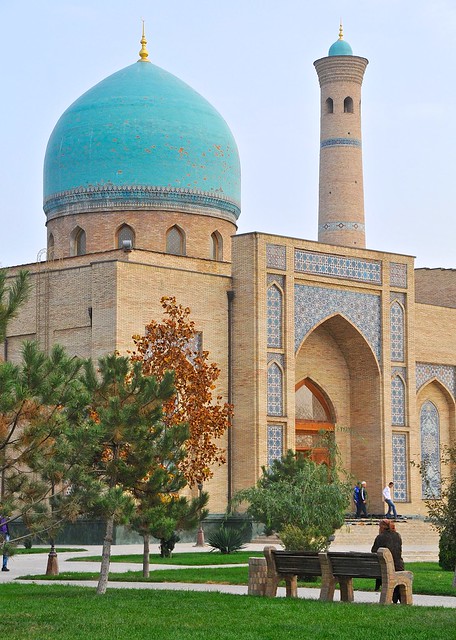 |
| The back of the mosque. The air is so polluted that shooting into the sun makes everything look hazy and washed out, while shooting with the sun yields very different results. |
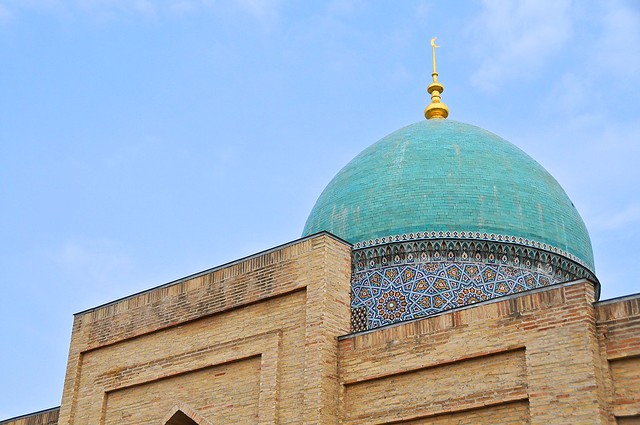 |
| Gorgeous geometric tile work and the aturquoise tiles on the dome that characterize so much Timurid architecture—unlike the mosque, the madressa dates from the 16th century. |
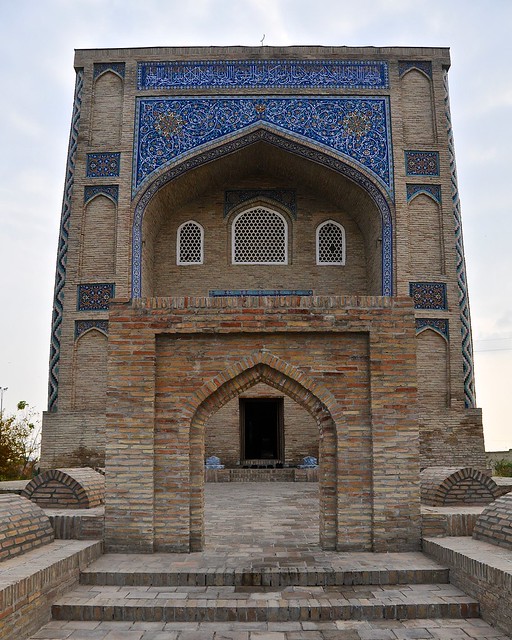 |
| The mausoleum of Abu Bakr Kaffal Shoshi, just north of the madressa. |
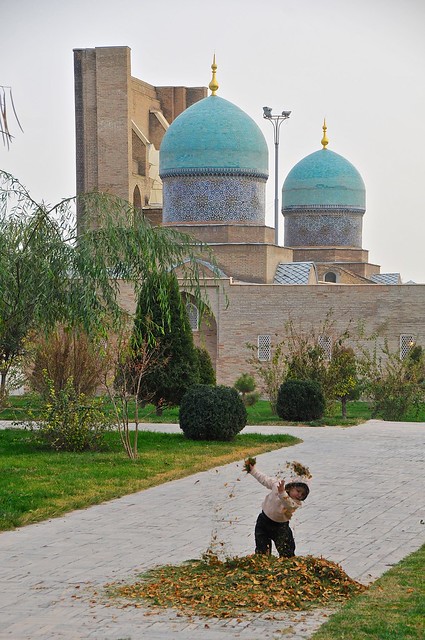 |
| This child knows the universal pleasure of playing in a pile of fallen leaves. |
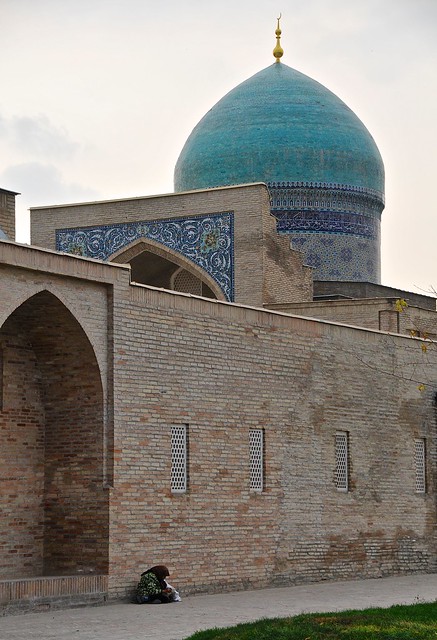 |
| A woman asking for alms in the shadow of the madressa. |
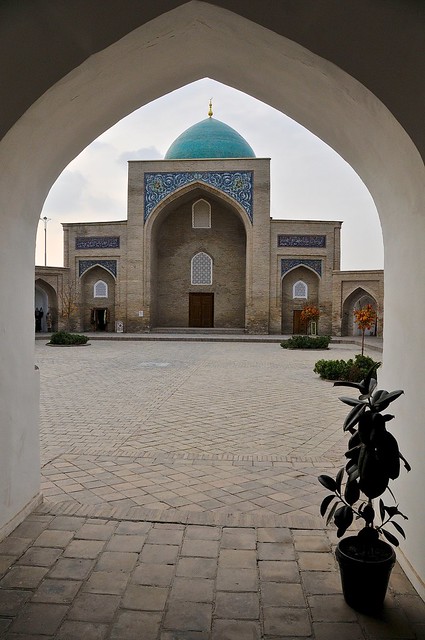 |
| View from the interior colonnade of the madressa. |
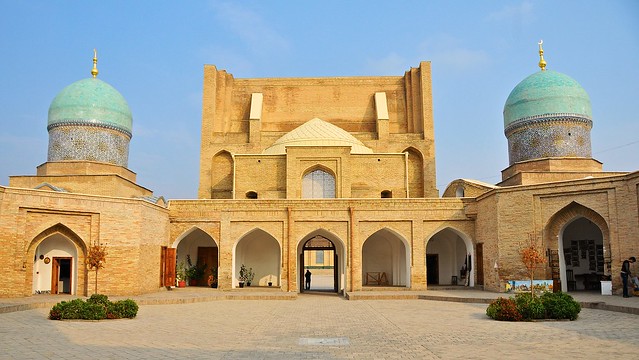 |
| Looking east from the madressa. |
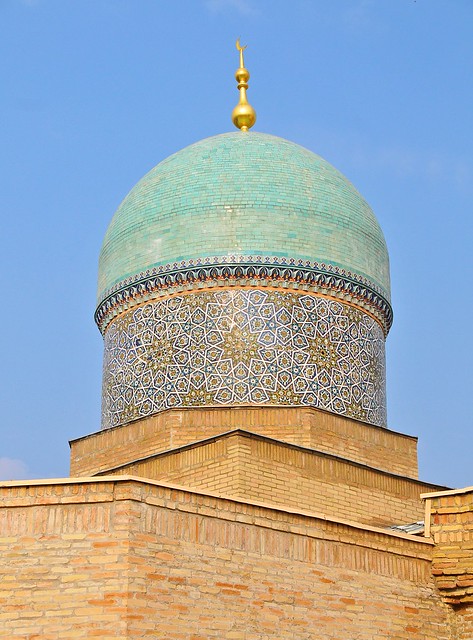 |
| Detail of the dome and tile work. |
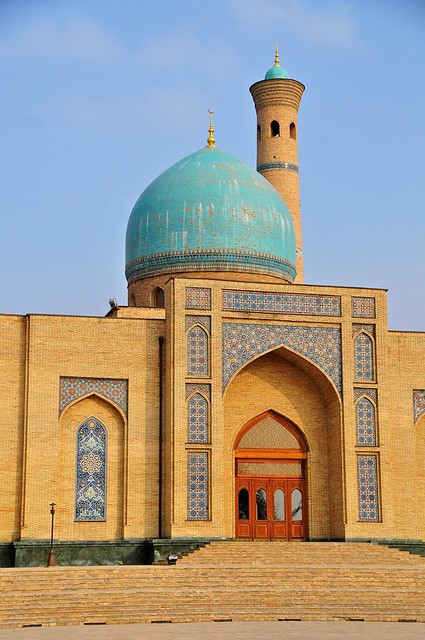 |
| The western entrance of the mosque. |
Chorsu Bazaar
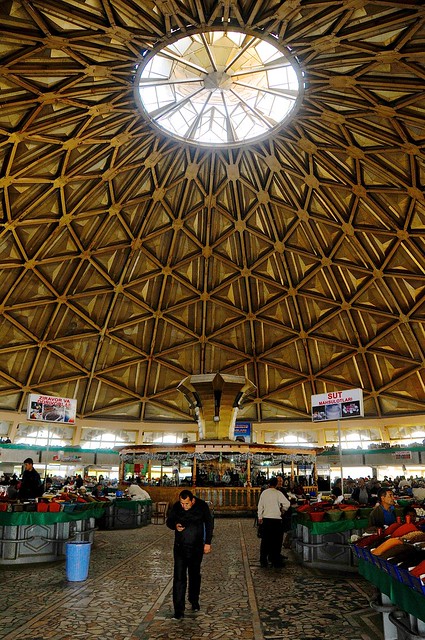
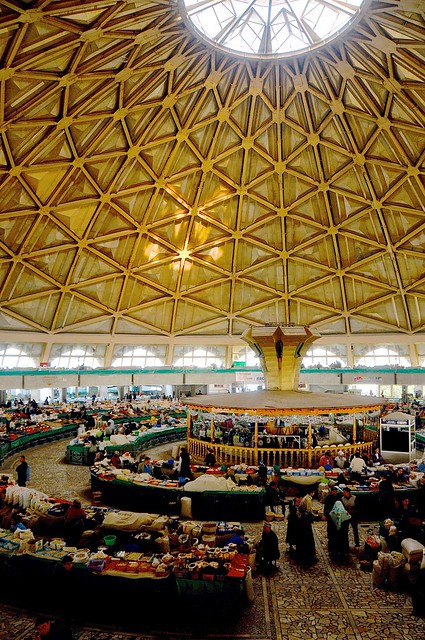
The nearby Chorsu Bazaar is, to my mind, much more interesting than the Kumtepa in Margilan, and is probably the best bazaar I visited in Uzbekistan. As the main bazaar in a huge city, it's an appropriately large complex, with different sections/buildings for fruits and vegetable, clothes and consumer goods, spices, etc. The most charismatic building is a circular domed building that somewhat resembles a cross between Phnom Penh's Central Market and a Soviet-style circus building—but which was undoubtedly inspired by Samarkand's ancient Chorsu bazaar, which is also round—and which holds the spice & dry food market.
 |
| Porters man their carts next to an entrance to the spice market. |
 |
| Concentric rows of spice vendors under the dome. |
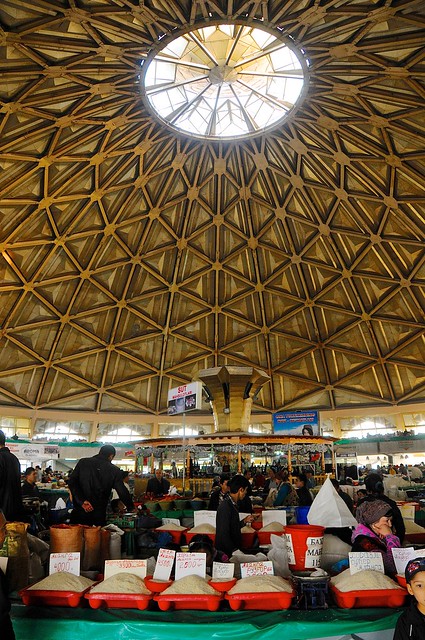 |
| Piles of rice on display. In the middle, directly under the dome's oculus, is a souvenir stand selling postcards, bags and the like. |
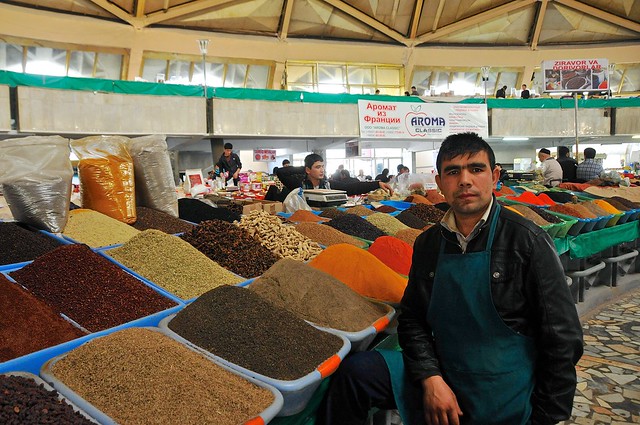 |
| This spice vendor wanted me to take his picture. A uni-brow is considered very attractive in Uzbekistan, especially on females—you often see it penciled in by those who only have two distinct brows. |
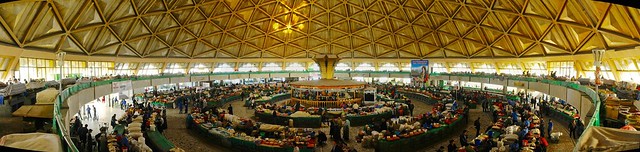 |
| Panorama of the market from the second floor. |
 |
| View from the second floor. |
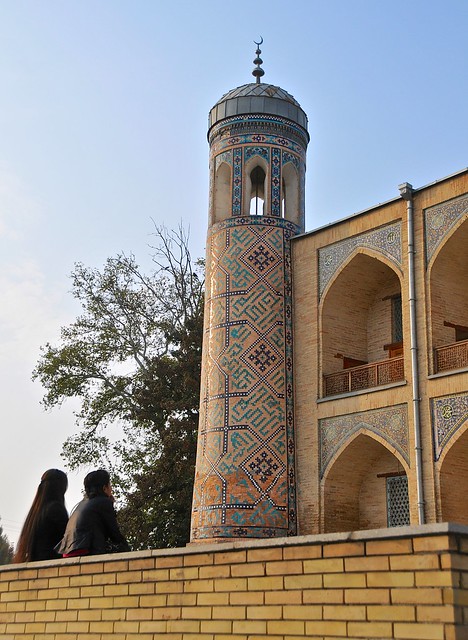 |
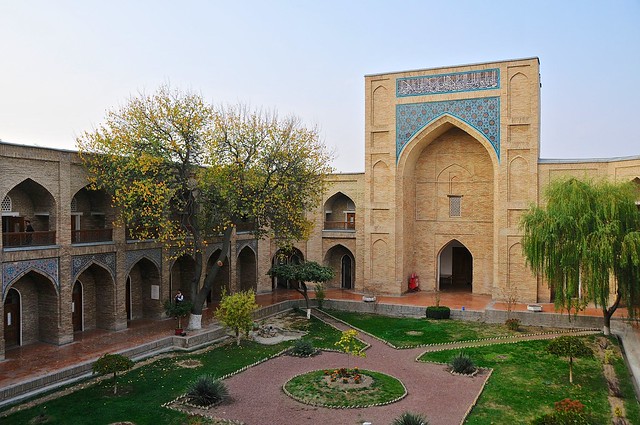
| A young couple admire the Kukeldash Madressa, located just southeast of the Chorsu Bazaar. |
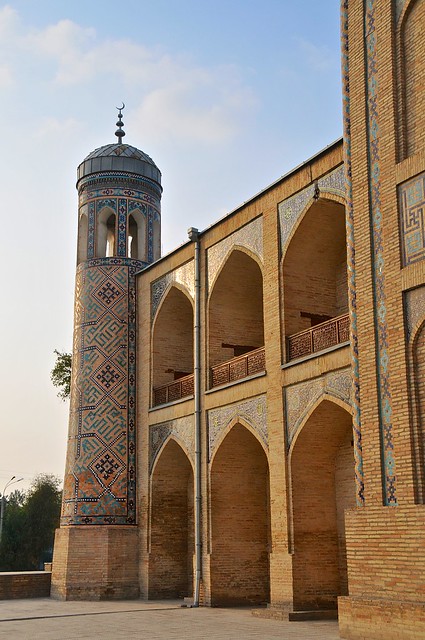 |
| I was taking this picture when I was approached by a curious local who wanted to talk to me. He was pretty friendly, and when he asked me what religion I was, I made the mistake of saying I had no religion. He wouldn't have minded if I said I was Christian or Buddhists (and I doubt he would have minded if I said I was Jewish), but he was legitimately concerned for me when I said I wasn't religious, and for his peace of mind he had me repeat the Shahada to signify my acceptance of Allah and Muhammed as his last prophet. |
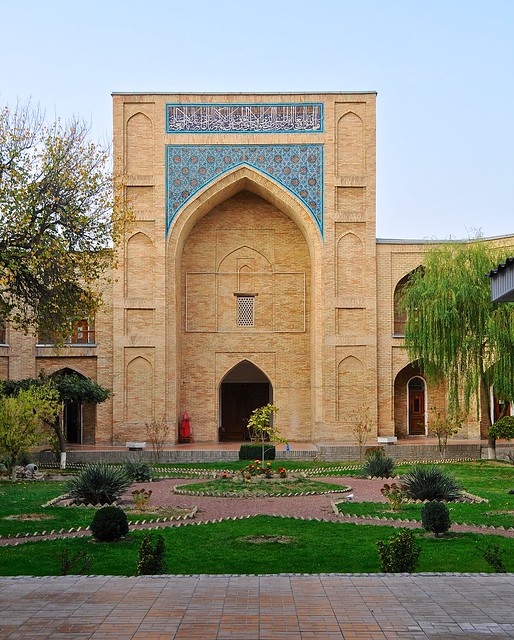 |
| Inside the madressa, which still functions as a religious school. |
 |
| Tourists aren't supposed to climb the stairs to the second floor, but I'm a very bad person. |
Navoi Park
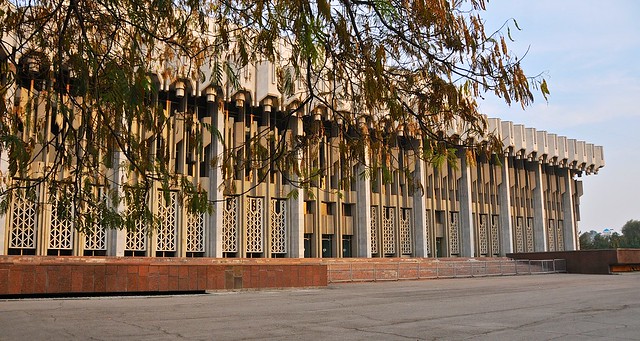 |
| The Istiklol Palace concert hall, on the northern end of Navoi Park. |
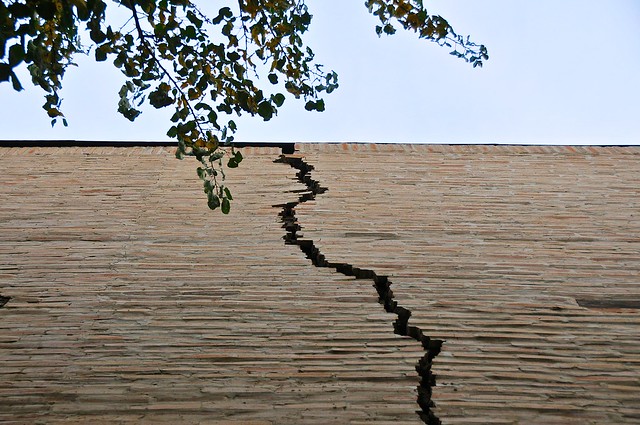 |
| South of Istiklol Palace is the Abdulkasim Sheikh madressa, which is now used as a space for cultural exhibits. The north side exhibits significant earthquake damage, and was apparently the most interesting thing about the madressa. |
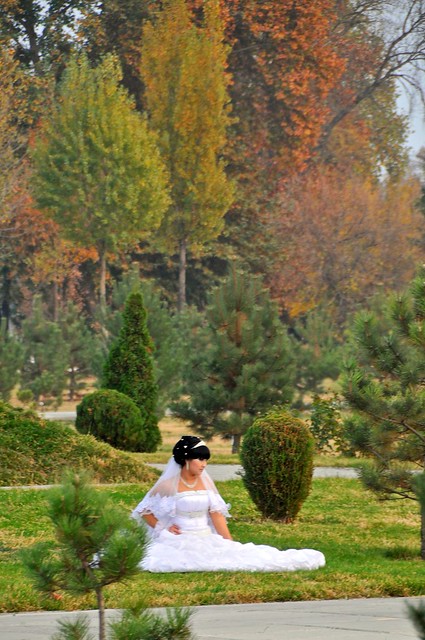 |
| There's a wedding palace in Navoi Park, and it's clearly a popular place to take wedding pictures. As with most of Central Asia (in the cities, at least), western-style wedding dresses are typical. |
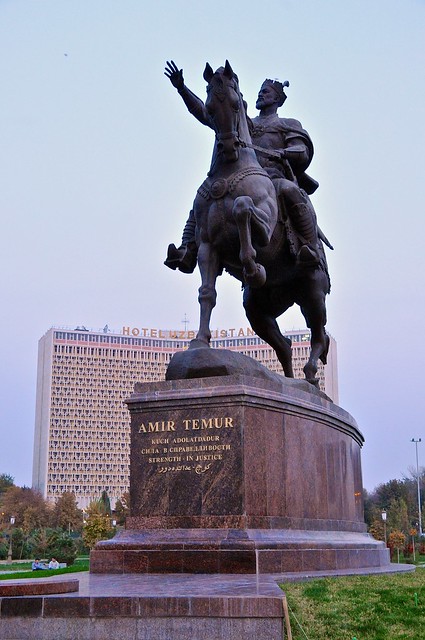 |
| The Amir Timur statue with the Hotel Uzbekistan in the background. Like the Hotel Kazakhstan in Almaty, the Hotel Uzbekistan was an architectural landmark... though I think the Hotel Kazakhstan is a much better building. |
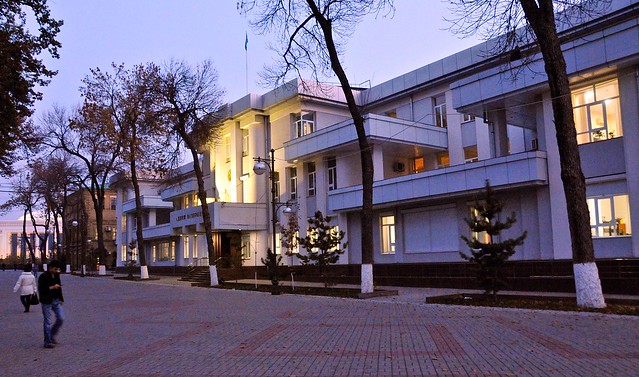 |
| The Ministry of Justice building has an unusual, Art-Deco-ish design—certainly a departure from typical Russian or Soviet-style architecture. |
There were a surprising number of shopping centers in buildings near the Ministry of Justice, but they were unusual in that they were like shops lining relatively narrow indoor hallways, like you might find in a subway complex or something. They had a few international stores like Zara (somewhat fittingly in the "Zarafshon" shopping center) but these appeared to be unofficial shops. There isn't much foreign corporate presence in Uzbekistan, and the international hotels apparently withdrew their investments/presence after the 2005
Andijan Massacre. On the other hand, you do have things like the Uzbek Chevrolet factory (75% locally owned, 25% by General Motors), as well as international things like an ATP tennis tour event.
Bit in reality Uzbekistan is very much isolated from international commerce. There are only a handful of ATMs that take international cards, and since I knew I was going to need to collect dollars for my time in Iran (where you cannot use ATM cards at all and have to bring enough hard cash into the country to last your entire stay—which I figured would be $800), I knew I would have to try and get dollars wherever I could—daily withdrawal limits had hampered how much I could withdraw in Osh. The only places that have international ATMs tend to be high-end hotels that get foreign tourists and/or businessmen, and I tried to track a couple down after the sun set and exploring was no longer possible. I found one of the few hotels that had an ATM, went past their guards and valet parkers, walked inside the extremely luxurious lobby, only to find that their ATM was empty—a common situation. I would have to hope that I had better luck in Samarkand or Bukhara.
After that, I took the subway back to Chorsu, picked up my bag from the guesthouse, and headed down to the train station to catch my train.
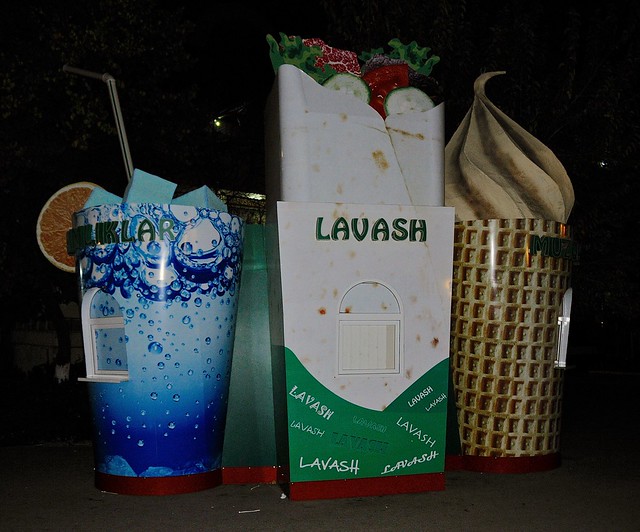 |
| I'll let you guess what each of these snack-food vendors at the Chorsu Bazaar were selling. |
Budget
November 2, Tashkent: 52,900 som
- Night train to Samarkand (1st class): 40,000 som
- Coffee sachets and ice cream: 2,200som
- 1kg of apples: 2,000 som
- Lavash and drink: 5,000 som
- Subway (5 trips): 3,500 som